Withdrawal methods compared: the stages each rail controls, and the ones it does not
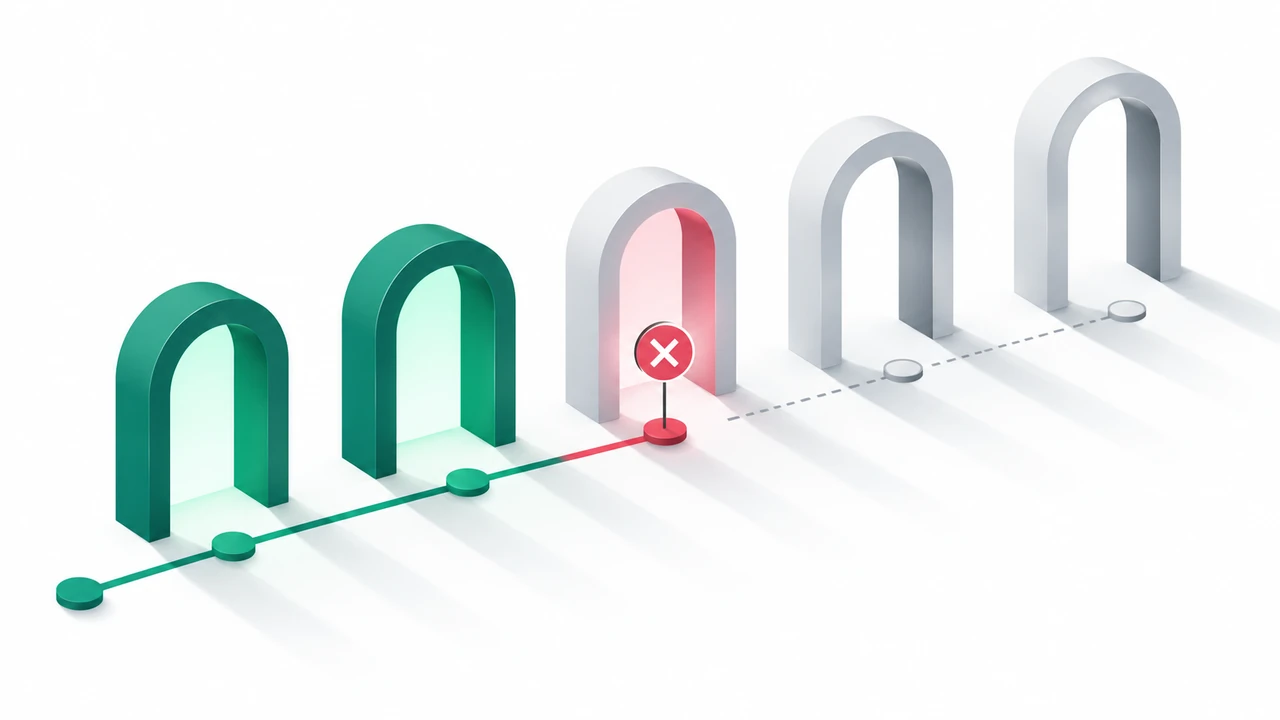
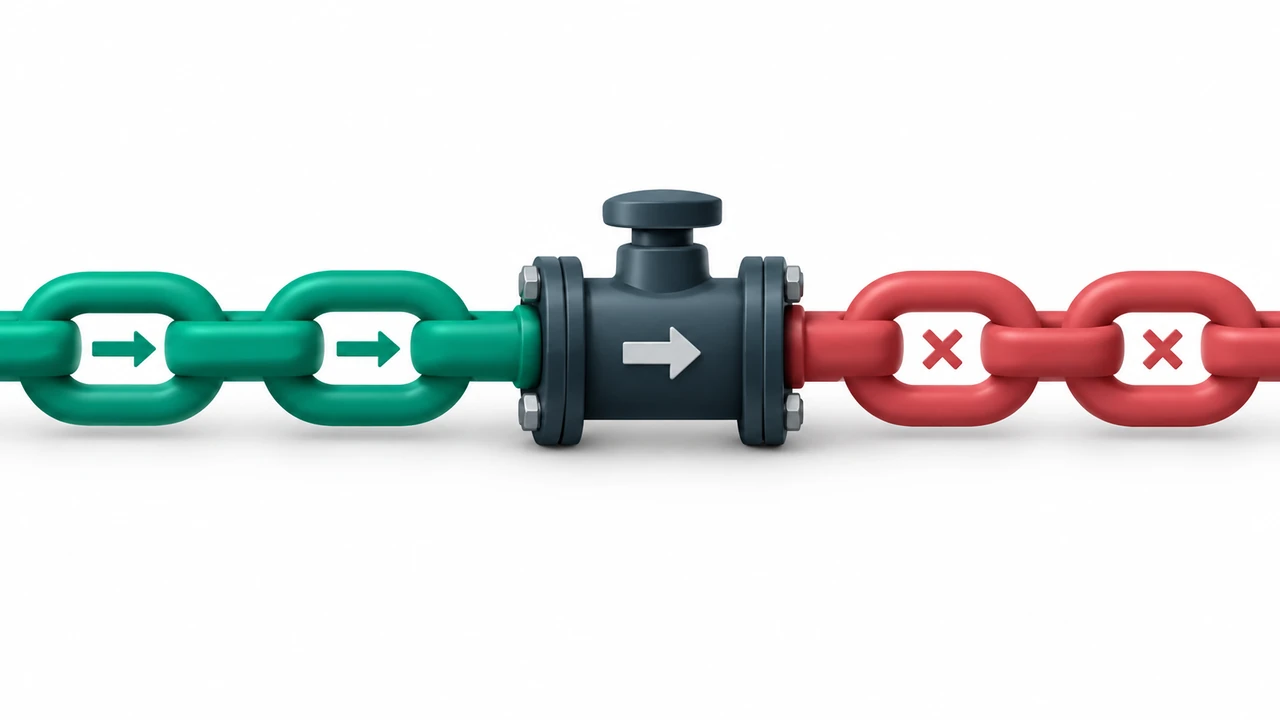
No withdrawal method is fast on its own. A payout crosses six stages between the button you press and money you can spend, and the rail you chose governs one of them. The other five belong to the operator, its processor and the institution receiving the funds, and none shorten because you picked a different entry on the dropdown. What a rail does decide is the shape of the delay, the full cost of the round trip, and which external body will read a complaint about the leg that failed.
Pokies Cashout · Payments and terms referencePublished Last reviewed Promotion figures supplied by site owner: 5 October 2026
Stages in a payout
Six — the rail governs one
Stage the rail controls
Transit; sometimes crediting
Stage nothing shortens
The operator's holding window
Deposit-only families
Vouchers, tokenised phone wallets
AFCA reach
Member financial firms, not the casino
Operators
Offshore — no Australian licence
Why "fastest withdrawal method" names one stage out of six
The question assumes the rail is the bottleneck, and it usually is not. Press withdraw on an offshore cashier and the request enters a queue the operator controls, sits out a holding window the operator sets, passes a check the operator runs, waits on a batch the processor releases, travels the rail you selected, then lands at an institution that decides when the funds become available. One of those six stages is a property of the method.
A methods strip advertising instant payouts is claiming something about the fifth stage and saying nothing about the four in front of it. The claim can be entirely true and the money can still take days, because a transfer that settles in minutes once released tells you nothing about when it is released.
Ask instead which stages a family of methods removes, relocates or adds. Crypto removes correspondent banking and adds an off-ramp. An e-wallet removes the wait at your bank and adds a second withdrawal. A voucher removes nothing, because it cannot receive money at all. None of them touch the holding window, often the longest stage of the six.
Then judge a rail on its worst case rather than its advertised one. Best cases are what marketing quotes and they cluster together; worst cases are where the families separate, and the worst case is what you live through on a first payout, a large one, or one requested the day a document request lands.
Sponsored partners · Display order is not an independent ranking.
18+ only. Availability depends on your location and eligibility. Any promotion is subject to the operator's live terms, including wagering, eligible games, maximum bets, expiry and cashout limits where applicable. Deposit and withdrawal methods, processing times and limits are set by the operator and its payment providers and are not guaranteed here. Offshore operator; not licensed to offer online casino services in Australia. Gambling involves financial risk. Checked: 2026-10-05. 18+. Gambling involves financial risk.
18+ only. Availability depends on your location and eligibility. Any promotion is subject to the operator's live terms, including wagering, eligible games, maximum bets, expiry and cashout limits where applicable. Deposit and withdrawal methods, processing times and limits are set by the operator and its payment providers and are not guaranteed here. Offshore operator; not licensed to offer online casino services in Australia. Gambling involves financial risk. Checked: 2026-10-05. 18+. Gambling involves financial risk.
The six stages of a payout and who owns each one
Write the stages down once and most withdrawal questions answer themselves. Submission: the cashier records an amount, a method and a destination. Holding: the operator leaves the request reversible or unprocessed for a period it defines. Review: compliance inspects the account, which is where verification gaps surface. Release: the processor batches the payout on its own schedule. Transit: the money moves along the rail. Crediting: the receiving institution posts it to a usable balance.
Ownership tells you who to ask. The first four stages belong to the operator and its processor, and no dropdown choice moves them. Transit belongs to the rail, the only stage the comparisons below apply to. Crediting belongs to your bank, exchange or wallet, governed by its posting practice rather than by anything the casino did.
The diagnostic use is locating a stall before raising a ticket. A payout still shown as pending has not reached transit, so nothing exists on the rail to trace and no reference can be produced; chasing your bank then is wasted effort. Marked paid with a reference, and nothing at your end, means transit or crediting — and that reference is what the receiving institution needs.
Every number attached to these stages is operator-specific. Holding windows, review turnaround, batch frequency, minimums and fees differ by brand, tier, currency and whichever processor is live that week, so the withdrawal tab inside your own account is the only authoritative statement of them. If you are comparing cashiers at Safe Casino or WinCrown, read the live method list there rather than from a payment-logo strip in a footer. More at /withdrawals/withdrawal-times/.
The six stages of a payout and who owns each one
The holding window: the stage no rail can shorten
Stage two is where speed comparisons die. Some operators leave a submitted withdrawal reversible for a set period, the funds still visible in the gaming balance, one tap returning them to play. Others simply do not begin processing until the period elapses. Either way the clock is the operator's, and it runs identically for crypto and for a bank transfer.
A reversal does not restart that clock; it erases the request, so a payout you thought was two days along is back at submission. Withdraw the full amount in one request, log out afterwards, and treat any in-session offer to cancel a pending payout as the retention mechanism it is: /withdrawals/pending-and-reversal/.
A second thing hides inside this stage, and it is why a first payout behaves nothing like later ones. The window is often when verification is triggered rather than when it completes, so a document request arrives during what you assumed was passive waiting. That cost is avoidable in full by verifying at registration — /kyc/id-verification/ and /kyc/accepted-documents/.
Weekends compound holding and release together, because a 24-hour gaming floor implies neither a 24-hour finance function nor a rail that settles on a Sunday. A request submitted Friday evening can wait on an operator window, a review desk, a batch release and a bank posting, all on business days — four sequential waits, none affected by the method: /withdrawals/weekend-processing/.
Sponsored · WinCrown · 18+
200 free spins on selected slots
WinCrown free-spin offer. Check the eligible slots, qualifying deposit and full promotion conditions.
Crypto payouts: quick on the chain, slow at the off-ramp
Crypto has the strongest claim on transit: once broadcast, a transaction is a chain event rather than a banking one, with no correspondent, no business day and no cut-off. The advantage is real and narrower than it looks, since it applies only after release. A withdrawal held at the operator's window is exactly as slow in Bitcoin as in anything else.
On the chain the variables are the network, its congestion, the fee attached and the confirmations the receiving party wants before crediting. Those differ by asset and by day, so a fixed figure is an average presented as a guarantee. The settled figures sit in a public explorer for your own transaction — ask for the hash the moment a payout is marked complete.
The stage crypto adds undoes much of the time saved. Coins in a wallet are not Australian dollars in a bank account, and converting them means an exchange with its own account opening, verification, limits, spread and fees, then a bank transfer on ordinary schedules. For a first-time holder that off-ramp is usually longer than any bank payout would have been: /payments/crypto-wallets/ and /payments/bitcoin/.
Two mechanical traps sit beside the speed question. The same ticker exists on several chains, and a payout sent on a network your receiving wallet does not support for that asset is not slow, it is gone, with no reversal and no complaint body. And the address you paste is final, with no beneficiary-name check of the kind banking rails perform: /payments/usdt-tether/, /payments/ethereum/ and /payments/litecoin/.
Conditions are published by the operator and change without notice. Read the live page before you act on anything here.
Bank transfer, Osko and the international wire behind both
Domestic Australian payments are among the fastest rails anywhere: the New Payments Platform, which Osko and PayID run on, settles between participating Australian institutions in close to real time, around the clock. The catch is participation. An offshore casino is not a participant, so a payout cannot be Osko'd to you from abroad, and where those services appear on an offshore cashier it is overwhelmingly on the deposit tab: /payments/osko/ and /payments/payto/.
A bank withdrawal from an offshore operator means one of two different things — an international credit through a correspondent chain, or a domestic transfer initiated by a local payment partner acting for the processor. The cashier rarely distinguishes them. The tell appears afterwards: a recognisable Australian originator points to a local partner, a foreign bank reference or an unexplained shortfall to a correspondent chain.
Correspondent routing is where hidden costs live. An intermediary can deduct a charge in transit, arriving as a shortfall rather than a line item, and conversion happens at a rate with a margin in it — read /withdrawals/withdrawal-fees/ before assuming the operator took it. Name matching is the other recurring stall: the destination account generally has to be in the same name as the gaming account, and joint accounts, maiden names and a partner's account fail the same check.
Bank rails have one compensating advantage no other family matches, and it is not speed. The payment attaches to a named account at a regulated Australian institution, which means a record, an addressable counterparty and a complaint route into a system that will read it. It is also the rail most exposed to your own bank's gambling controls: /safety/bank-blocks-on-gambling/.
Bank transfer, Osko and the international wire behind both
E-wallets: a fast first leg and a second withdrawal you still run
E-wallets win a comparison that was framed wrongly. An operator paying a wallet transfers to another payment business rather than into the banking system, so the first leg can be quick once released. What it buys you is a balance inside the wallet; spending it as Australian dollars needs a second withdrawal, on ordinary banking timetables, with its own fee and minimum.
So the honest comparison is leg one plus leg two against a bank's single leg, and framed that way the advantage frequently disappears. Where the wallet does win is when you withdraw repeatedly and let a balance accumulate, or when it is the only route the operator offers that can receive at all — which is how most people end up on it.
Costs here are layered: a fee from the operator, a margin inside the wallet when currencies differ, a fee on the wallet-to-bank leg, and a dormancy charge if the balance sits unused. Several wallets also treat gambling-related transactions under specific terms. Read the current fee schedule itself: /payments/skrill/, /payments/neteller/ and /payments/mifinity/.
The structural risk is a second account that can be frozen independently of both your bank and the casino, with its own verification and limits, and whose escalation path is its own regulator rather than the casino's support desk. Hence a rule worth setting before you deposit: sweep a wallet balance to a bank account on receipt, because money parked in a payment business is subject to that business's discretion.
Sponsored · Safe Casino · 18+
+250% welcome bonus
Safe Casino welcome offer. Check the qualifying deposit, bonus cap, wagering and eligibility before accepting.
Card payouts, phone wallets and vouchers: the one-way families
The card networks do support pushing a credit back to a card, and where a cashier offers payout to card that is the mechanism. Three parties must each permit it: the processor must support the scheme, the scheme must allow the merchant category, and your issuer must accept the credit. Any one declining bounces the payout back to the operator for reissue by another method — the slowest outcome on this page.
Credit cards sit inside a separate Australian regulatory question that is not symmetrical with deposits; what those measures reach is at /safety/credit-card-ban/. Issuers also apply their own rules in both directions, so ask yours to state the rule rather than infer one from a decline. A refund is not a payout either: it returns to the card used for one prior purchase and is capped by it, so balance growth cannot travel that path.
Apple Pay and Google Pay are not payout rails at all, structurally. Both provision a token standing in for a card so a payment can be pushed out, and a token is a credential, not an account with an address that can receive a credit. Prepaid vouchers are one-directional for a different reason: a code is bought and spent, and no voucher account holds a balance in your name to credit.
That produces the most reliably painful sequence in this area. Someone deposits by voucher precisely to keep gambling off a bank statement, wins, opens the withdrawal tab and finds the exit requires a bank account or wallet in their own verified name — the privacy is spent at the payout, under time pressure. For every deposit-only family the rule is the same: open the withdrawal tab first, identify the method that will pay you, verify it on the day you register. See /payments/apple-pay/, /payments/google-pay/ and /payments/neosurf/.
Total cost of the round trip measured against the time saved
Speed is worth paying for once you know the price, and the price is a round trip rather than a single fee. Count four components: what the operator deducts per withdrawal, what the rail takes in transit, what the receiving institution charges to credit or convert, and the currency margin on each conversion. A rail that wins transit and loses three of those four is not cheaper.
Work the shape with placeholder values. One rail charges a flat amount, another a percentage: a flat fee of 10 units against a payout of 200 is a 5% cost, and the same fee against 2,000 is 0.5%. The two schedules therefore rank differently at different amounts, and your payout size decides the answer. Substitute your cashier's figures — the arithmetic is one division.
Minimums interact with fees to produce the bad outcomes. A per-withdrawal charge plus a minimum amount can make several small payouts cost multiples of one consolidated payout, while a cap per period forces exactly that fragmentation: read both limits together at /withdrawals/minimum-withdrawal/ and /withdrawals/withdrawal-limits/. A large payout also tends to trigger extra review, instalments or a source-of-funds request, and the rail changes none of it.
Currency conversion is usually the largest cost and the least often checked, because it is priced into a rate rather than shown as a fee. Convert on the way in and again on the way out and each leg carries a margin against the mid-market rate, visible only by comparing the applied rate against the mid-market rate that day. Do the arithmetic in the account's own currency and convert once at the end: /withdrawals/currency-conversion/ and /withdrawals/large-win-payouts/.
Which external body will read a complaint about each rail
This is the comparison nobody runs, and it matters more than any handling time, because slowness is an inconvenience and an unrecoverable payout is a loss. The Australian Communications and Media Authority's position is that online casino services cannot lawfully be provided to people in Australia, and every operator referred to here is offshore. There is no Australian gambling regulator with authority over the casino's handling of your withdrawal.
What remains attaches to the other parties in the chain. The Australian Financial Complaints Authority handles complaints about financial firms that are its members — banks and a range of licensed financial and credit providers — after the matter has been raised with the firm first. An offshore casino is not a member, so AFCA cannot arbitrate a withheld gaming balance; it can consider how an Australian bank handled a transfer, a block or a disputed card transaction. Whether a given firm is a member, what the scheme costs a complainant, and the time limits that apply to your particular complaint are all AFCA's own rules and they change, so confirm them with AFCA directly rather than from a figure quoted on any affiliate page, including this one.
ACMA accepts reports about prohibited and unlicensed interactive gambling services, which is an enforcement channel rather than a recovery one. Scamwatch, run by the National Anti-Scam Centre at the ACCC, is likewise a reporting destination, and the right one for cloned cashiers and advance-fee demands: /safety/scam-warning-signs/. AUSTRAC is an anti-money-laundering regulator and does not resolve individual disputes.
Rail by rail the reach differs sharply. A bank transfer is strongest, because a regulated Australian institution sits in the chain with a record and an accountable complaints process. A card payment is next, since a scheme dispute process exists even where an authorised gambling loss will not qualify for it: /safety/chargebacks/. An e-wallet points at its own regulator abroad. A crypto payout has no dispute mechanism on the chain at all, and the only Australian-facing party is the exchange you off-ramp through. A voucher deposit has no payout leg to complain about.
Against the operator itself the only levers are its licensing authority and any dispute body its terms name. Many name none, and this page will not characterise any authority's responsiveness — find the clause before you deposit, because an absent complaints route is itself the finding. Keep the request screen, the destination as entered, the reference or transaction hash, the terms on the day and your statement entries: /withdrawals/payout-proof/ and /kyc/account-closure-and-funds/.
The decision rule to set before depositing, and what is not asserted
Five steps, in this order, before any money moves. Open the withdrawal tab first and write down the methods that can actually pay you, with their minimums, limits and fees. Pick the one with the strongest complaint path you can live with rather than the quickest headline. Verify your identity and that method on the day you register. Deposit by something compatible with that exit, then withdraw in one request and leave the cashier alone.
The ranking that falls out is not the one the methods strips imply. For transit alone crypto leads once released, and the off-ramp claws much of it back for anyone without an exchange account. For end-to-end time to spendable Australian dollars, a bank payout is frequently competitive. For recourse, bank rails lead, card rails follow, e-wallets point offshore and crypto offers none. For deposit-only families the question does not arise.
What this page deliberately does not assert is a set of times, fees and limits. No hour counts, business-day counts, fee amounts, minimums or caps appear above, because each is operator- and processor-specific and changes without notice; a figure printed here would read as authoritative while being wrong. The authoritative source is the withdrawal tab in your own account plus the operator's payments terms, read on the day.
Three further things are not claimed. No operator is named as supporting any particular payout method, since support rotates with processors faster than any list can track. No operator is described as licensed in Australia, because none is. And nothing here is a view on which brand is better or how a game behaves — operator shortlists and bonus offers sit with pokiesledger.com, game mechanics, RTP and volatility with pokiesalmanac.com. The gap between the fastest and slowest rail at transit is usually smaller than the gap between a verified account and an unverified one.
Why "fastest withdrawal method" names one stage out of six — at a glance
Questions people actually ask
What is the fastest casino withdrawal method for Australians?
Measured on transit alone, crypto is the quickest once an operator releases the payment, because a chain transaction does not wait on correspondent banks or business days. Measured end to end — to spendable Australian dollars in a bank account — a bank payout is frequently competitive, because crypto adds an exchange off-ramp with its own verification, limits, spread and final bank transfer. Neither touches the operator's holding window, review or batch schedule, which together are often the longest part of the wait.
Why is my withdrawal slow when the method is advertised as instant?
Because the advertisement describes one stage out of six. Submission, the operator's holding window, compliance review and the processor's payout batch all precede transit, and none of them change with the method you selected. If the cashier still shows the payout as pending or processing, it has not reached the rail at all, so there is nothing for your bank or a block explorer to show and no reference to trace. Locate the stage before raising a ticket.
Can I withdraw to Neosurf, Paysafecard, Apple Pay or Google Pay?
As a family, no. Vouchers are spent codes rather than accounts holding a balance in your name, and Apple Pay and Google Pay provision a token that can push a payment out but has no address that can receive one. Deposit by any of them and your payout must leave by a second method you have not yet used or verified. Check the withdrawal tab and verify that second method before you deposit, not after you win.
Does PayID or Osko work for casino withdrawals?
The New Payments Platform that Osko and PayID run on settles between participating Australian institutions in close to real time, but an offshore casino is not a participant, so it cannot send you an Osko payment directly. Where those services appear on an offshore cashier it is usually as a deposit route. Whether any withdrawal variant exists, and whether it is in fact a domestic transfer initiated by a local payment partner, is a per-brand question answered only on the live withdrawal tab.
Which withdrawal method is cheapest overall?
It depends on the amount, because flat fees and percentage fees cross over. A flat charge is proportionally heavy on a small payout and light on a large one, while a percentage does the opposite, so the same two schedules rank differently at different amounts. Count all four components — operator deduction, transit cost, receiving-institution charge and currency margin on each conversion — then divide by the payout to compare. Currency conversion is usually the largest and the least visible, since it is priced into a rate rather than shown as a fee.
If an offshore casino refuses to pay me, who can I complain to?
Not an Australian gambling regulator: ACMA's position is that online casino services cannot lawfully be provided to people in Australia, so there is no Australian authority over the operator's handling of your balance. AFCA handles complaints about its member financial firms, which can cover how an Australian bank handled a transfer or a card dispute but not a withheld gaming balance. ACMA accepts reports about unlicensed interactive gambling services and Scamwatch accepts scam reports, but both are reporting channels rather than recovery mechanisms. Against the operator, the only routes are its licensing authority and any dispute body its terms name — check whether one is named before depositing.
Does the rail I choose affect whether I get paid at all?
Not the decision itself, which is made at the operator's review stage and turns on verification, bonus terms and account conduct rather than on the method. The rail does affect what happens afterwards: a payout sent on the wrong blockchain network or to a mistyped address is unrecoverable with no complaint body, while a bank or card payment that cannot be credited generally bounces back to the operator and has to be reissued. Choose the rail partly for its failure mode.
Should I keep money in an e-wallet between withdrawals?
Treating that as a default adds a third party able to freeze funds independently of both your bank and the casino, with its own verification, its own limits and its own regulator in whichever jurisdiction licenses it. Sweeping a wallet balance to a bank account on receipt costs one transfer fee and removes that exposure. It also forces you to count the second leg honestly, which is the leg that erases most of the apparent speed advantage over a direct bank payout.