Currency conversion: where the spread is applied and who applies it
A deposit shown as "A$50" on a cashier screen may never have been an Australian dollar payment. Conversion can happen at your bank, in the card scheme, at the payment processor, inside the operator's wallet, or at several of those in sequence, and each leg prices its margin into the rate rather than charging a fee you can see. That is why a payout can land short with every published fee accounted for. This page separates the legs, shows how to tell a spread from a fee on a statement, and sets out which figures to establish before depositing rather than after a withdrawal arrives short.
Pokies Cashout · Payments and terms referencePublished Last reviewed Promotion figures supplied by site owner: 5 October 2026
Conversion points
Up to three per payment
How it is priced
In the rate, not as a fee
Authoritative figure
Live cashier and your bank
Operators
Offshore, not AU licensed
Three places a conversion can happen inside one deposit
A conversion is any point in a payment path where one currency is bought with another, and one casino deposit can contain several. The first sits at your bank or card issuer, debiting an Australian dollar account for a transaction denominated in something else. The second sits in the scheme or processor layer, where the transaction is converted for settlement. The third sits in the operator's ledger, where what arrived is credited to a wallet denominated in a third currency.
Those legs are not alternatives. They stack. Whether a deposit crosses one conversion point or three depends on the currency your funding account is held in, the currency the merchant actually bills in, and the currency your operator wallet is denominated in. Three currencies with two conversion points between them is ordinary rather than unusual, and each conversion applies its own rate, so the cost compounds instead of being charged once.
The cashier label tells you very little about this. A price printed with a dollar sign may be an indicative display converted at a rate the operator chose for presentation, while the billing currency is fixed somewhere else in the flow. A deposit field that accepts an Australian dollar figure is a display convention, not evidence that an Australian dollar payment is what leaves your bank.
So the question is never whether a conversion cost exists. It is how many conversion points the payment crosses and who prices each one. Establish that from three facts: your account currency, the currency named on the confirmation your bank or wallet issues, and the currency shown against your operator balance. Wherever two of those differ, a conversion sits between them and somebody has taken a margin there.
Sponsored partners · Display order is not an independent ranking.
18+ only. Availability depends on your location and eligibility. Any promotion is subject to the operator's live terms, including wagering, eligible games, maximum bets, expiry and cashout limits where applicable. Deposit and withdrawal methods, processing times and limits are set by the operator and its payment providers and are not guaranteed here. Offshore operator; not licensed to offer online casino services in Australia. Gambling involves financial risk. Checked: 2026-10-05. 18+. Gambling involves financial risk.
18+ only. Availability depends on your location and eligibility. Any promotion is subject to the operator's live terms, including wagering, eligible games, maximum bets, expiry and cashout limits where applicable. Deposit and withdrawal methods, processing times and limits are set by the operator and its payment providers and are not guaranteed here. Offshore operator; not licensed to offer online casino services in Australia. Gambling involves financial risk. Checked: 2026-10-05. 18+. Gambling involves financial risk.
Who sets the rate at each leg, and where that rate is published
Each conversion point has a different party setting the rate, and they publish on completely different terms. Your bank or card issuer is the only one in the chain that gives you a written basis in advance: the foreign transaction clause in your account terms and fee schedule, stating whether a percentage loading applies and how the base rate is determined. It is the one figure in this chain you can establish with certainty before paying, and it costs a few minutes to read.
The card schemes publish a wholesale rate used for settlement; issuers typically reference it, then apply their own loading on top. Both affect what you are debited and only the second is yours to discover. A statement line showing a converted amount will not tell you which part of the gap was the scheme rate and which was your issuer's margin, unless your terms set the loading out as a stated percentage.
The processor layer is the least visible. An offshore operator's cashier is usually fronted by a processor incorporated somewhere unrelated to the brand, billing in whatever currency its arrangement specifies. That rate is published to you nowhere, and the billing currency can differ between two deposits of the same size on the same site as processors rotate behind the cashier.
The operator's ledger is the last one. Where a wallet is denominated in a currency other than the one you paid in, the operator decides the rate at which your payment is credited and at which a withdrawal converts back out. Some terms describe this as applied at a rate the operator determines, which is an honest way of saying there is no external reference to check it against. Read the currency clause in the live terms and treat a clause with no stated basis as a cost of unknown size.
Who sets the rate at each leg, and where that rate is published
Spread or fee: two different things that both shrink your money
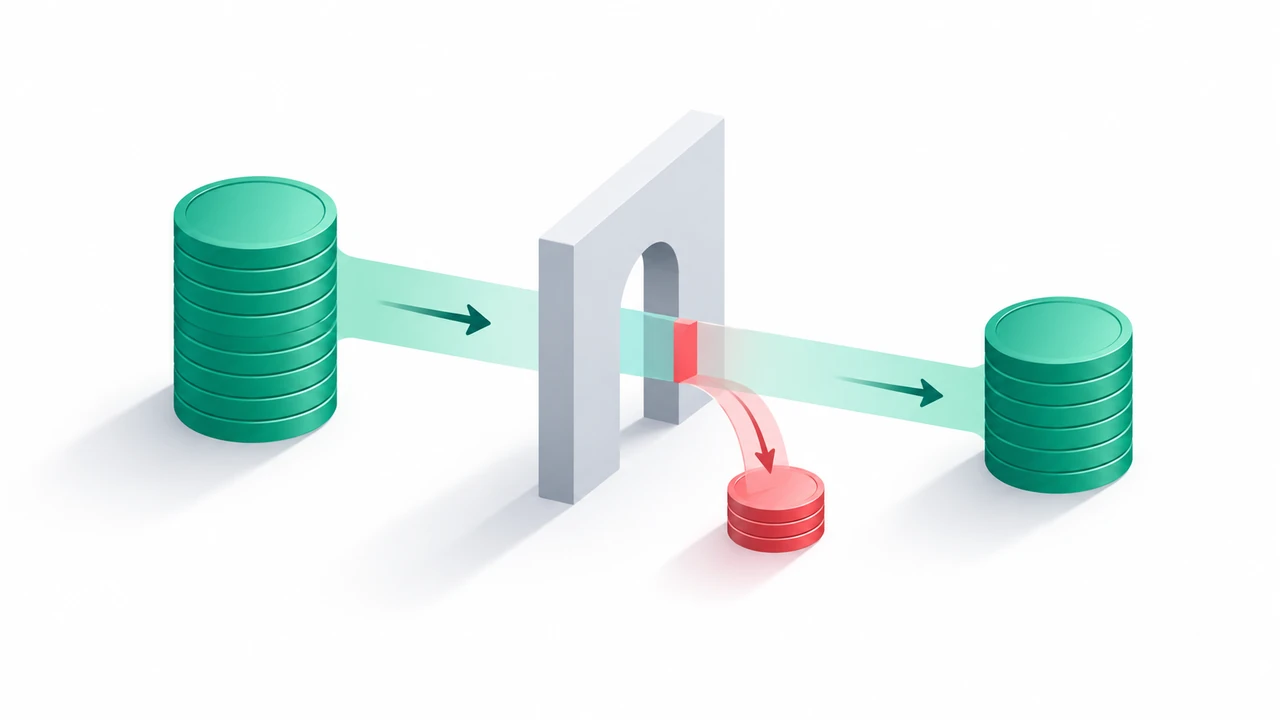
A fee is a separate charge. It has its own figure, usually its own line, and it appears in a fee schedule or on a cashier page in advance, so you can add it up and point at the document it came from. A spread is not a charge at all. It is a margin built into the rate you were given, and the only trace it leaves is a number slightly worse than the reference rate for the day. Nothing is ever labelled as the spread, because structurally it is a price rather than a charge.
That distinction decides what you can argue. A fee charged where the terms do not provide for one is a complaint with a document behind it. A spread wider than you expected is usually not a breach of anything, because the terms rarely promise a particular rate. Which means a spread has to be dealt with before the payment, by choosing a path with fewer conversion points, and not afterwards.
Telling them apart on a statement is mechanical: look at what the entry does to the principal. A fee leaves the principal intact and sits beside it, itemised. A spread shows up as the principal itself being a different number from the one you expected, with no accompanying entry explaining the difference. If the amounts reconcile only once you assume a rate other than the day's reference rate, the difference was in the rate.
A third thing is routinely mistaken for both: a deduction taken out of money in transit by an intermediary handling the payment. That is a fee, but it is not your bank's and it is not on any page you were shown. On an international wire it is the correspondent chain, covered on the bank transfer page. Work the layers in order rather than accepting the first explanation offered.
Sponsored · WinCrown · 18+
200 free spins on selected slots
WinCrown free-spin offer. Check the eligible slots, qualifying deposit and full promotion conditions.
Working the rate backwards from what your statement says
The method is division, and it answers the only question that matters: what rate was I actually given. Divide the amount debited from your Australian dollar account by the amount credited in the other currency. That is the all-in rate you paid, with every margin included and no need to know who took what. Compare it against the reference mid-market rate for that date, which you can look up independently, and express the gap as a percentage.
An illustration with arbitrary figures, purely to show the shape of the calculation: an account is debited 154.20 Australian dollars and the operator credits 100 units of another currency. The all-in rate paid is 1.542 per unit. If the reference rate that date was 1.500, the gap is 0.042, which is 2.8 per cent. Those numbers describe no operator, bank or real transaction; only the arithmetic transfers.
Run the same division on the return leg separately, because the two legs are priced independently and at different times. A round trip crosses a spread twice, so the honest measure of what conversion cost you is the sum of both gaps. Money that goes in and comes back out without being staked can still be smaller on return purely through that double crossing, which surprises people who assume an untouched balance is inert.
Where a stated loading exists in your bank's terms, subtract it from the total gap and what remains is the margin applied upstream. That split is worth doing once: it tells you whether your real cost is the issuer loading, which you change by funding differently, or the upstream rate, which you change only by removing a conversion point. Keep the cashier confirmation and the statement entry, because the arithmetic needs both numbers and sessions are not retrievable later.
Conditions are published by the operator and change without notice. Read the live page before you act on anything here.
The choice screen asking which currency you want to be billed in
Somewhere in a card flow you may be offered a choice between paying in Australian dollars and paying in the merchant's own currency. This is dynamic currency conversion, and the offer is real: choosing Australian dollars moves the conversion from your issuer to the merchant's side of the transaction, where a different party sets the rate and a different margin applies.
It is presented as convenience, and in one narrow sense it is. You see the exact Australian dollar figure before confirming rather than discovering it days later. What you buy with that certainty is a rate you did not choose, set by a party with no relationship to you, in place of whatever basis your issuer's terms gave you.
Which option is cheaper cannot be stated in the abstract, because it depends on the margin in the offered rate against your issuer's loading plus its own margin, and both vary. It can be settled for your own card once. Do the division above on one payment made each way, compare the all-in rates, and you have an answer specific to your card that holds until your terms change.
Two practical notes. Screenshot any Australian dollar figure you accept at the moment of payment, because it is the only record of what you agreed to and it will not reach your statement in that form. And nothing in this choice removes a conversion from the chain; it relocates one. If your wallet is denominated in a third currency, the operator-side conversion happens afterwards whichever button you pressed.
The choice screen asking which currency you want to be billed in
Wallet denomination: the one setting that removes a conversion point
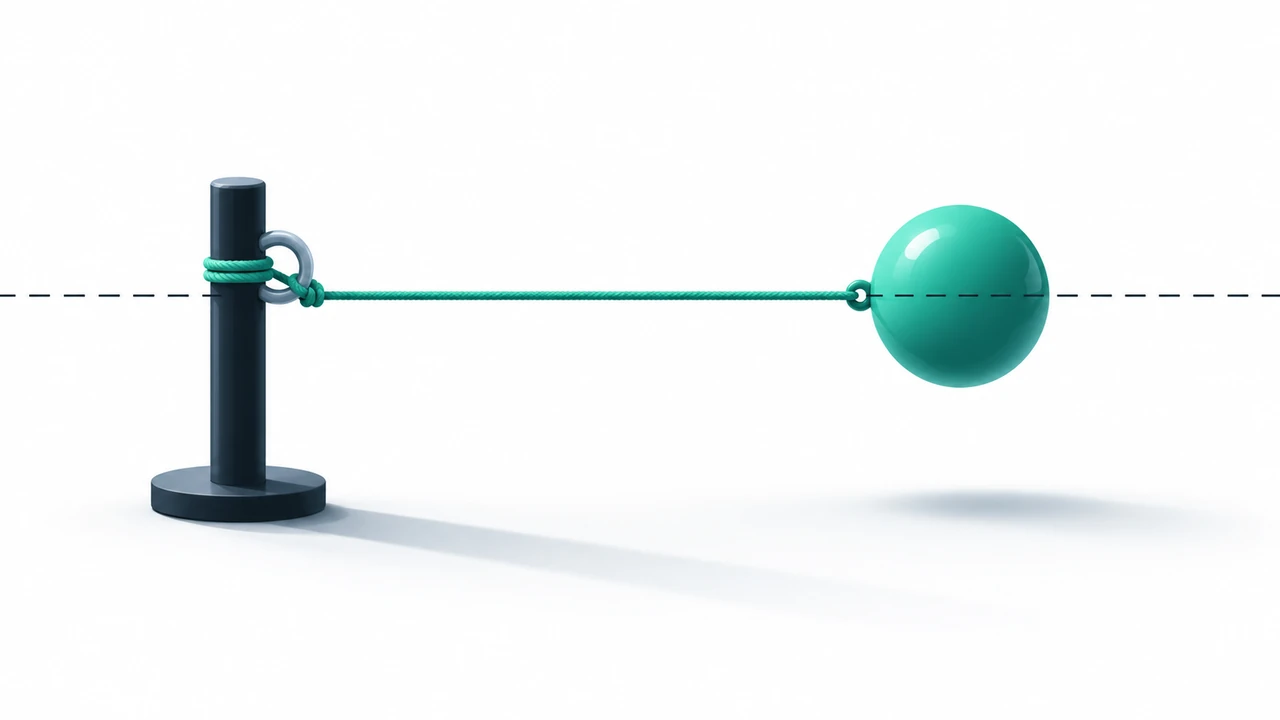
The most effective move available is structural rather than tactical: reduce the number of currencies in the chain. Where your funding account, the billing currency and your operator wallet are the same currency, there is no conversion point and no spread to find. Every additional currency in that chain adds a margin somebody else sets and you cannot audit.
Some cashiers let you choose the denomination of the wallet when the account is created, and that choice is frequently irreversible afterwards, or changeable only by closing the account and opening another. It is a decision to make deliberately at sign-up rather than by accepting a default. Choosing an Australian dollar denomination where one is offered removes the operator-ledger conversion; it does not remove an upstream conversion if the processor still bills in something else.
Check what the wallet is denominated in rather than what the lobby displays. Many interfaces show balances in a currency you selected for display while the ledger underneath runs in another, and that display setting has no effect on any rate applied. The cashier, the transaction history and a withdrawal confirmation are better places to read the real denomination than the balance in the page header.
If you are heading to Safe Casino or WinCrown, this is something to read in the cashier and account settings rather than anywhere in the lobby, and whatever either one displays at the moment you are standing in front of it is the only version that binds. Nothing here says what denominations either supports, and a list published on a page like this would be stale before it was useful.
Sponsored · Safe Casino · 18+
+250% welcome bonus
Safe Casino welcome offer. Check the qualifying deposit, bonus cap, wagering and eligibility before accepting.
Crypto deposits and e-wallets: conversions hidden inside one balance
A crypto deposit does not avoid conversion; it relocates it and usually adds a leg. First you buy the asset with Australian dollars at a venue's rate plus its spread and fees. Then the operator credits your wallet, valuing what arrived at a rate it determines at crediting time. Neither is the price on a chart, which is a market reference rather than an executable rate for your size at your venue.
The second leg is the overlooked one. Where a wallet is denominated in a fiat currency and funded with a crypto asset, the operator converts at credit, on whatever basis its terms state. Where the wallet is denominated in the asset itself there is no conversion at credit, but exposure to the asset's price moves sits with you until you withdraw. A stablecoin reduces the volatility part and removes none of the conversion part. Network transfer costs are a separate fee in the asset and belong outside this arithmetic.
An e-wallet is an account, not a payment method, and it carries its own denomination independent of both your bank and the operator. That makes it a conversion point in its own right, and the common error is treating the balance as a neutral holding place. Fund it in Australian dollars, pay the operator in another currency, and the wallet converts, applying its own rate and any stated percentage at that moment.
Most of these providers do publish a conversion percentage on their own fee pages, which is better disclosure than most of the chain offers, so read it there rather than here. A multi-currency wallet can genuinely remove a leg if the balance debited is already in the currency the operator bills in, but which balance the provider selects may be automatic, so check the transaction record rather than assuming the one you intended was used.
The return leg converts again, at a worse point in the sequence
A withdrawal crosses the same chain in reverse and is priced separately, at the rates applying when it is processed rather than when you requested it. Because a payout sits in a pending window and then waits for verification and finance approval before money moves, the rate used can be days removed from the one in front of you when you pressed the button. The request locks nothing unless the terms say so, and they generally do not.
Expect the payout to arrive in whatever currency the paying side sends, which is not always the currency you deposited in. A deposit that left your account domestically can return as an international credit because the paying bank sits elsewhere, and that credit converts at your bank's inward rate with its inward international fee on top. Establish which currency a withdrawal will be sent in before requesting it, because that one fact decides whether your bank converts on arrival.
Work a short payout in a fixed order so you do not accept the first explanation offered. Operator-side deductions stated in the terms. Processor or correspondent deductions taken from money in transit. Your bank's inward fee from its own schedule. Then the rate, by division. Only an unexplained residue after all four is worth raising, and you raise it with the amount approved, the amount credited, both currencies, the date and the reference, asking for the remittance advice.
One structural point. Operators commonly return funds by the route they arrived on, up to the amount deposited, so the conversion path out is often fixed by the path in before you have considered it. Choosing a funding method is also choosing a payout conversion path, which is the real reason to count conversion points on the way in rather than treating the deposit as the easy half.
Converted balances against bonus thresholds and caps
Bonus terms are written in numbers, and a converted balance meets those numbers after conversion rather than before. A stated minimum qualifying deposit is tested against what arrived in the wallet, so a payment sized to clear a threshold exactly can land under it once a spread has been taken, and a promotion is then missed by a rounding gap rather than by any error you made. Where a threshold matters, fund above it rather than at it.
The same applies at the other end, in a sequence people commonly reverse. A maximum cashout expressed in the wallet currency is applied to the wallet balance first, and whatever you keep is converted on the way out second. Two reductions, in that order. Applying the conversion first produces a larger number than you will receive. The arithmetic of caps themselves sits on the maximum cashout page; what belongs here is only the ordering.
A maximum bet rule while a bonus is active is the most dangerous of these, because breaching it can void a balance rather than reduce it. Where the rule is stated in one currency and your stake is placed in another, the compliance test runs in the operator's terms currency, so a stake that looks safely under the cap in your display currency can sit over it after conversion. Stake well clear of a stated figure and read the rule's currency as carefully as its number.
None of this is a reason to go looking for operator rankings or bonus offers here, which are not this site's subject; those sit on pokiesledger.com. This page covers the arithmetic underneath whatever offer you are reading, and that arithmetic is identical whoever published the offer. Keep the cashier confirmation, the payment confirmation and the operator transaction record at the time, because the calculation needs figures from all three and none of them stays available.
A short sequence before the first deposit, and what this page will not tell you
Six checks, in order, none urgent until it is too late. Read the foreign transaction clause in your own account terms and note whether a loading is stated as a percentage. Check what currency your operator wallet is denominated in, in the cashier rather than the page header. Check which currency the deposit will be billed in, from the confirmation screen rather than the deposit field. Count the conversion points between those three. Read the operator's currency clause and note whether any basis for its rate is stated. Then ask whether a different funding path has fewer points.
Do the division once on your first small deposit, before you have a reason to care. That calculation gives the all-in cost of your chosen path as a percentage, which is the only figure that lets you compare one path against another honestly. Repeat it on your first withdrawal, add the two, and you know what a round trip costs on that path. Everything above is explanation of where those two numbers came from.
What this page deliberately does not assert: no rate, spread, loading, fee or threshold figure for any operator, bank, card scheme, wallet or exchange. Those vary by institution, by product, by day and by the processor behind a cashier at the moment you look, so a number printed here would be wrong rather than merely old. The authoritative sources are your own terms and fee schedule for your side, and the live cashier and current terms for the operator's side.
Two boundaries stated plainly. Every operator referred to here is offshore, because ACMA's position is that online casino services cannot lawfully be provided to people in Australia, and nothing above describes an Australian licence. And nothing here concerns how a game behaves or what it returns; game mechanics, volatility and return figures sit on pokiesalmanac.com and in the loaded game's own info panel. This site covers the money path only, for an audience of 18 and over.
Three places a conversion can happen inside one deposit — at a glance
Questions people actually ask
How do I work out what a currency conversion actually cost me?
Divide the amount debited from your Australian dollar account by the amount credited on the other side. That gives the all-in rate you were given, including every margin in the chain. Compare it against the independently published reference mid-market rate for that date and express the gap as a percentage. Do the same on the withdrawal separately and add the two, because a round trip crosses a spread twice.
What is the difference between a conversion spread and a payment fee?
A fee is a separate charge with its own figure, published in a fee schedule or on a cashier page, and it leaves the principal intact. A spread is a margin built into the exchange rate, so nothing is labelled and the only trace is a principal that differs from what you expected. A fee charged without a term behind it is arguable; a spread usually is not, which is why it has to be dealt with before the payment.
Should I choose to be billed in Australian dollars when a payment page offers it?
That choice moves the conversion from your card issuer to the merchant's side, where a different party sets the rate. Which is cheaper depends on the offered rate against your issuer's loading and margin, and neither can be stated in advance for your card. Settle it for yourself by making one payment each way and comparing the all-in rates by division. Screenshot any Australian dollar figure you accept, because it will not appear on your statement in that form.
Does a crypto deposit avoid currency conversion?
No, it usually adds a leg. You convert Australian dollars into the asset at a venue's rate and spread, and the operator then values what arrived at a rate it determines when crediting your wallet. Network transfer costs are a separate fee in the asset and should be kept out of the conversion arithmetic. Divide what left your account by what was credited to the balance to get the all-in cost of the whole path.
Why did my withdrawal arrive smaller than the amount approved?
Work four layers in order before concluding anything. Operator-side deductions stated in the terms. Processor or correspondent deductions taken from money in transit. Your bank's inward fee from its own schedule. Then the exchange rate, by division. Only an unexplained residue after all four is worth raising, and when you raise it, supply the amount approved, the amount credited, both currencies, the date and the reference, and ask for the remittance advice.
Can I stop the operator converting my balance?
Only by removing the currency difference. Where a cashier lets you choose the wallet denomination at sign-up, matching it to the currency you fund in removes that conversion point, and the choice is often irreversible afterwards. Check the denomination in the cashier and transaction history rather than the balance shown in the page header, which may be a display setting with no effect on any rate applied.
Does conversion affect bonus thresholds and bet limits?
Yes, and the sequencing matters. A minimum qualifying deposit is tested against what arrived in the wallet after conversion, so a payment sized to clear a threshold exactly can land under it. A maximum cashout is applied in the wallet currency and the capped amount is then converted on the way out, which is two reductions in order. A maximum bet rule is tested in the operator's terms currency, so stake well clear of a stated cap rather than close to it.
Who can tell me the exact rate before I pay?
Only your own bank or card issuer gives you a written basis in advance, in the foreign transaction clause of your account terms and fee schedule. The processor behind a cashier does not publish its rate to you, and an operator's currency clause may state nothing more specific than a rate it determines. Treat a clause with no stated basis as a cost of unknown size and plan the payment path accordingly.