Self-custody wallets and exchange accounts for casino withdrawals
Two different things get called a crypto wallet, and only one of them is a wallet. A self-custody wallet is a key you hold. An exchange account is a balance an Australian company owes you, recorded in its own ledger and governed by its own terms. Offshore casino cashiers accept sends from both and treat them identically, which is why the distinction stays invisible until something goes wrong: a network picked from the wrong dropdown, an address that was valid but retired, a payout delivered somewhere the receiving party declines to credit. This page covers what custody changes, how the network field decides where funds land, and why a send that was never reversible cannot be argued back.
Pokies Cashout · Payments and terms referencePublished Last reviewed Promotion figures supplied by site owner: 5 October 2026
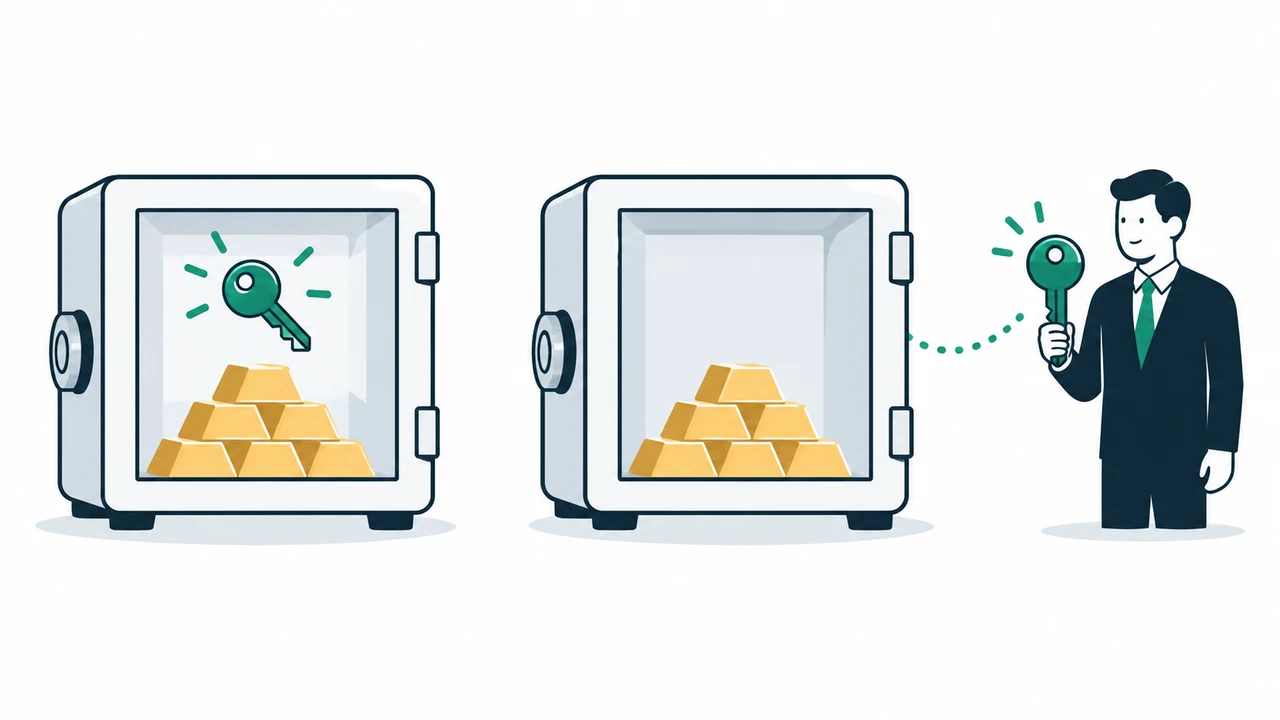
Self-custody
You hold the key — no reset, no reversal, no support desk
Exchange account
A claim on the exchange, under the exchange's terms
Deciding field
Network, not asset — read it off the live cashier
Operators
Offshore. Not Australian licensed, no local recourse
Keys, addresses and what a wallet actually holds
A self-custody wallet holds no coins. It holds a private key, and the coins are ledger entries that the key authorises you to move. So the app is replaceable and the key is not: reinstall the software on a new phone, enter the same recovery phrase, and the same balance reappears without anyone's permission. Lose the phrase and no support desk can reconstruct it, because nobody else ever held it.
That is the whole meaning of custody. With the key in your hands a transaction leaves the moment you sign it, and nothing can freeze, reverse or review it: no account to suspend, no business-imposed limit, no terms governing your own spending. Read it the other way and that is also the cost — no reset, no complaints line, no insurance, no second signature to catch a mistake.
Keep address and key apart, because one scam depends on readers blurring them. An address is public, derived from the key, and safe to publish — a cashier prints one on its deposit screen for exactly that reason. The recovery phrase that encodes the key is not. Anything asking for a phrase in order to verify a deposit, sync a balance or release a withdrawal is attempting theft, and the request itself is the tell.
Wallet categories differ in exposure rather than function. Software wallets keep keys on an internet-connected device. Hardware wallets sign without exposing the key and display the destination on their own screen, where a compromised computer cannot rewrite it. Browser extensions share every exposure the browser has. Whichever you choose, test the written backup by restoring from the phrase alone while little is at stake; a transcription error found then costs nothing. Plan one more constraint at the same time: on most networks the fee is paid in the network's native asset, so a wallet holding only a token has nothing to pay with and the balance sits visible and immovable until you top it up.
Sponsored partners · Display order is not an independent ranking.
18+ only. Availability depends on your location and eligibility. Any promotion is subject to the operator's live terms, including wagering, eligible games, maximum bets, expiry and cashout limits where applicable. Deposit and withdrawal methods, processing times and limits are set by the operator and its payment providers and are not guaranteed here. Offshore operator; not licensed to offer online casino services in Australia. Gambling involves financial risk. Checked: 2026-10-05. 18+. Gambling involves financial risk.
18+ only. Availability depends on your location and eligibility. Any promotion is subject to the operator's live terms, including wagering, eligible games, maximum bets, expiry and cashout limits where applicable. Deposit and withdrawal methods, processing times and limits are set by the operator and its payment providers and are not guaranteed here. Offshore operator; not licensed to offer online casino services in Australia. Gambling involves financial risk. Checked: 2026-10-05. 18+. Gambling involves financial risk.
An exchange account is a claim, not a wallet
On an Australian exchange you have an account. The exchange holds the keys, and your balance is a number in its ledger standing for what the business owes you. Moving coins between two accounts at the same exchange often touches no blockchain at all — it is a bookkeeping entry, which is why it can be instant and free while an on-chain send to the same person is neither.
That arrangement buys real things: password resets, two-factor recovery, human support, an Australian company reachable under Australian law, and a route between the asset and dollars. For anyone turning dollars into a coin and later back again, an exchange does the one part of the job no self-custody wallet can do at all.
It also imports a counterparty with a rulebook. An exchange can freeze an account, request documents mid-withdrawal, decline an incoming transfer, and apply its own position on gambling-related activity. Those terms are enforced at the worst available moment — when an offshore payout lands on an address the exchange controls and it starts asking where the funds came from.
Hence a division of labour rather than a choice. Buy and sell against dollars at the exchange, because nothing else reaches the banking system; send to and receive from a cashier with a wallet whose key you hold. The cost is one extra transaction each way. Watch for the middle category too: a hosted app that calls itself a wallet, shows a balance and holds the keys. The test is one question — if the service can restore your access after you forget a password, it holds the keys, not you.
An exchange account is a claim, not a wallet
The network field, and the send that succeeds in the wrong place
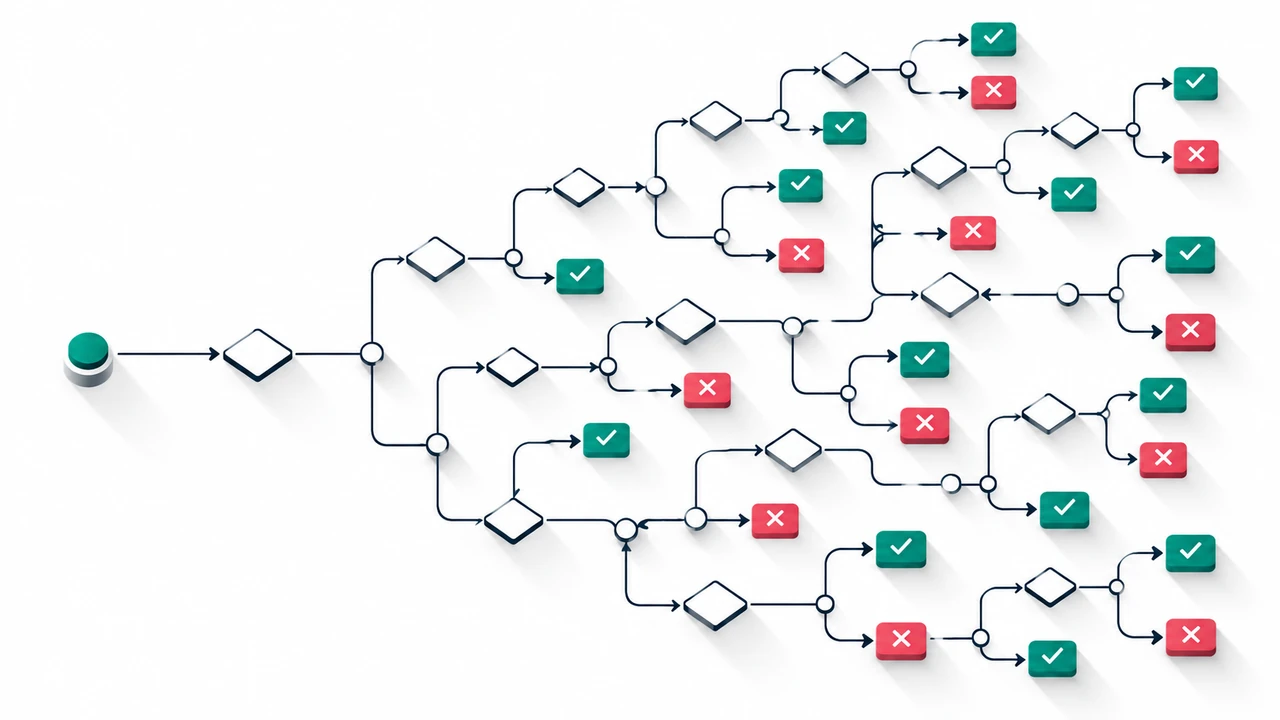
Most assets a cashier lists are addressable on more than one network. Stablecoins are the clearest case: the same ticker is issued separately on several chains, address formats can look identical between some of them, and the chains do not observe one another. A cashier naming an asset without naming a network has given you half an instruction, and the missing half decides where the money ends up.
The failure is mundane. You open the exchange's withdrawal screen and the network dropdown is already populated, often with the cheapest option or one flagged as recommended. You paste the casino's address, which is structurally valid on that network, so no warning fires. The send completes. The cashier's deposit monitor, watching a different chain, sees nothing. Your coins are at the address you intended, on a chain nobody is checking.
The fix is a reading order, not a skill. Read the network printed on the live deposit screen. Set that same network on the sending side and read it back. Re-read the asset, because a previous selection can carry over. Only then paste the address. Where no network is named, that is a question for support, answered before you send anything.
Screenshot the deposit page showing asset, network and address: pages get rebuilt and deposit addresses rotated, so an instruction you followed may be unverifiable a week later. Where this turns up in practice: Safe Casino and WinCrown each route crypto through a banking section of their own, and the thing to read there is whatever network label sits beside the asset on the day — a note about where the field lives, not a claim about either operator.
Sponsored · WinCrown · 18+
200 free spins on selected slots
WinCrown free-spin offer. Check the eligible slots, qualifying deposit and full promotion conditions.
Address validation is real and narrow. Most formats carry a checksum, so a competent wallet rejects a mistyped character and refuses to build the transaction; some encode case in that checksum, which is why an address retyped in lower case can be rejected outright. That covers exactly one failure, a malformed address. Every other address failure produces a well-formed address, and well-formed addresses are accepted.
Three of them pass validation cleanly. An address valid on the wrong network. An address that was valid and has since been retired by the operator, which no software can detect — the reason to copy from the live cashier rather than from a saved contact or an old email. And a token contract address pasted in error, which is a well-formed destination that is not a destination.
The usual verification habit is the one malware is built to defeat. Clipboard hijackers substitute an address whose first and last characters match, because checking the ends is what people do. Check the full string, reuse an address-book entry you verified once, or sign on a hardware device that shows the destination where the host cannot rewrite it.
Memo and destination-tag fields are the opposite trap. Some networks let an operator issue one shared deposit address and separate players by tag, so a send without the tag arrives in a pooled account with nothing identifying it. Other networks have no such field, and a cashier showing a reference code beside an address on one of those is either doing something you should understand first or has copied an instruction from a different rail. Ask which before sending.
Conditions are published by the operator and change without notice. Read the live page before you act on anything here.
Irreversible means irreversible, and what recovery really is
A confirmed on-chain transaction has no counterparty who can undo it. No chargeback, no recall, no scheme rule, no issuer to escalate to, because the intermediary that makes those possible on a card or bank rail has been deliberately removed. That is the design rather than a defect, and it is the fact that should govern how slowly you fill in a send screen.
So recovery is never a right and only sometimes a request. Sort a wrong send into four cases. Your own address on a chain you do not use: you hold the key, and the obstacle is usually a fee reserve rather than access. An address controlled by a business — an exchange, a casino — depends entirely on whether it operates on that chain and chooses to help, which is goodwill supported by evidence.
The other two are worse. An address belonging to an unknown third party, reached by a typo that still checksummed or by a hijacked clipboard, is gone. A contract address, or a destination the receiving system cannot process, is generally unreachable by anyone outside the project that deployed it. In none of the four cases does a ticket, an explorer or a paid service create an ability to move funds; only the key does, which is why consumer crypto recovery services deserve the assumption that they are a second theft.
The conclusion is a slow send, not a nervous one. Read the asset, the network, the full address and the amount off the live screen, with the signing device's confirmation page beside them, and then sign. Those seconds are the only control in the system, because once the signature exists nothing stands between the transaction and finality.
Irreversible means irreversible, and what recovery really is
The deposit, in the order the checks have to happen
Sequence a deposit so the cheap checks come first. Logged in, read the asset list, then the network label, then the minimum deposit for that asset and network — often different per network and the figure most often missed. Then read the withdrawal tab, while not depositing is still an option, because the payout asset, network and fee are usually decided by the deposit you are about to make.
On the sending side, set the network before the address, so the address is validated against the network you intend rather than one that was pre-selected for you. Paste rather than type, verify the full string against the cashier page, enter the amount, then read the quoted fee and confirm that what will actually arrive clears the minimum.
That last check has arithmetic behind it. Where the sending side deducts the network fee from the amount sent, the figure that must clear the minimum is the amount after the fee, not the amount you typed. A deposit sized at exactly the minimum lands underneath it, where it is neither credited nor obviously missing, and becomes a support conversation. Size the send above the minimum by more than the quoted fee.
A test send is sometimes right. A small send costs one fee and proves the asset, network and address are live; the real send then costs a second. Paying one extra fee to protect a much larger sum is good value whenever that fee is small against the amount at risk, a ratio you can compute from the quote before signing. The constraint is the minimum: a test below it may arrive and never credit, proving the route works and opening a ticket at once.
Sponsored · Safe Casino · 18+
+250% welcome bonus
Safe Casino welcome offer. Check the qualifying deposit, bonus cap, wagering and eligibility before accepting.
Give a cashier a payout address whose key you hold. An exchange deposit address is not that: it belongs to the exchange, it is credited to you under the exchange's rules, and those rules commonly address funds arriving from gambling services. A payout that lands there and is not credited becomes a dispute with your exchange, about money that has already left the casino.
Nominating a wallet converts that into a transfer you control. The payout lands where only you can move it, and you send it onward to the exchange yourself, in your own name, which is a very different thing to explain if anyone asks. One extra transaction, one extra fee, and no third party's policy standing between a confirmed payout and your ability to touch it.
Two mechanics are worth setting up before you need them. Many wallets and exchanges support an address whitelist with a delay before a new entry becomes usable, which is the strongest defence against a last-minute substitution on a large payout. And some cashiers lock the payout rail to the deposit rail, which makes the deposit decision the withdrawal decision, taken before you had the information. One sum belongs here too: call a flat payout fee F and the amount you want out W, and taking W in four instalments costs 4F while the sum received does not change, whereas a percentage fee makes the instalment count irrelevant. Which model applies is on the withdrawal tab and nowhere else.
Name matching crosses rails. Offshore operators generally pay only to an address associated with the verified account holder, and third-party funding and payout clauses are common enough to read for rather than assume — whether one applies at a given cashier, and what it forfeits, is set out in that operator's own payments and bonus terms and nowhere else. A wallet address carries no name, which sounds like an exemption and is not: the operator checks it against the address you deposited from, so sending from a friend's wallet creates the problem a friend's card creates.
A send that has not arrived: work it in this order
Start where it costs nothing. Confirm the transaction actually left: an exchange withdrawal held for internal review has not been broadcast and has no hash yet, and messaging the cashier will not change that. Those are two different problems with two different counterparties, and routing the first to casino support wastes days you may need later.
With a hash, open a block explorer and read four things off it: which network you are looking at, the destination address in full, the amount that actually arrived, and the confirmation count. That one screen resolves most cases. Wrong network, and the funds are at your address on a chain the operator does not watch. Wrong address, and the four cases above say who, if anyone, to ask. Amount under the minimum, and the deposit is sitting unrecognised rather than lost.
If network, address and amount are all correct and the transaction is confirmed, the remaining questions belong to the operator: whether that address is still monitored, whether a conversion or manual review is pending, and whether the deposit is held against a verification requirement. Ask once, with the hash, the address, the network name and the timestamp. An account name and a complaint cannot be investigated; a hash can.
Two things not to do. Do not send a second payment to diagnose the first, because two unexplained transactions are harder to trace than one and the second often lands the same way. And treat anyone requiring a further deposit to release an earlier one as describing an advance-fee scam, whatever the page calls it — a network fee, an unlock charge, a verification deposit.
The Australian end: exchange terms, records and the legal position
Australian law prohibits the supply of interactive online casino gaming to people located in Australia, which is why every operator in view here is offshore and none holds an Australian licence for it; the Australian Communications and Media Authority publishes the current position and its enforcement register, and that is the place to read it rather than any page of ours. Choosing a wallet over an exchange account changes nothing about that. What it changes is where your Australian counterparties sit: not at the cashier, but at the exchange where you buy and sell and the bank that funds it — the parties able to stop a leg of the round trip.
Read your exchange's terms on gambling-related transfers before relying on it as any part of the chain. Exchanges set their own policies, revise them, and enforce them on incoming funds at the point where you most need them not to. It is the shortest reading involved and the likeliest to prevent a real loss, and it is why the split above puts a wallet you control between the cashier and the exchange rather than joining the two directly.
Keep records at the time rather than reconstructing them: for every movement, the date, the asset, the network, the amount, the Australian dollar value then, and the transaction hash. The hash is what makes an entry verifiable in a way a balance screenshot never is. Disposing of a crypto asset — converting, swapping or spending it — can carry record-keeping consequences independent of any gambling question, and the Australian Taxation Office's published position is that records should exist at the time. Read current ATO guidance or get qualified advice.
Two absences are deliberate. There is no table of which operators take which assets on which networks, at what minimum and with what payout fee, because each value belongs to one operator and is revised without announcement — and a stale network string copied from a comparison table is the most expensive error available on this rail. Operator shortlists and bonus offers are pokiesledger.com's subject; game mechanics, RTP and volatility are pokiesalmanac.com's. Read asset, then network, then minimum, then payout fee off the live cashier, and never let a pre-selected dropdown make the second decision for you.
Keys, addresses and what a wallet actually holds — at a glance
Questions people actually ask
Is a self-custody wallet or an exchange account better for a casino withdrawal?
Take the payout into a wallet whose key you hold, then move the funds onward to an exchange yourself if you want dollars. An exchange deposit address belongs to the exchange and is credited under its terms, which commonly address funds arriving from gambling services — and that gets enforced on arrival, when the money has already left the casino.
What happens if I send crypto to a casino on the wrong network?
The send usually succeeds, because the address is valid on that network, and the operator's deposit monitor watching a different chain never sees it. The funds sit at your intended address on a chain nobody is checking. Whether anything can be retrieved depends on who controls that address and whether they operate on that network; it is a request, not a right.
Can a casino crypto deposit be reversed?
No. A confirmed on-chain transaction has no intermediary holding the funds and therefore no mechanism to move them back — no chargeback, no recall, no scheme rule. That is the design rather than a fault, and it is why the asset, network, address and amount are read off the live cashier before signing rather than after.
Why can I see a balance in my wallet but not send it?
On most networks the fee is paid in the network's native asset, not in the token you are moving, so a wallet holding only a token has nothing to pay the fee with. Fund it with a small amount of the native asset. Where the asset is the native one, the fee comes out on top of the amount, so an entire balance cannot be sent in one transaction.
Does a wallet warn me before I send to a wrong address?
Only for a malformed one. Address checksums catch mistyped characters, which is useful and narrow. A valid address on the wrong network, a retired deposit address, and a token contract address pasted by mistake all pass validation cleanly. Verify the full string rather than the first and last few characters, which is exactly what clipboard-hijacking malware is built to defeat.
Should I make a small test deposit first?
It is worth one extra network fee whenever that fee is small against the amount at risk, and the quote appears before you sign. The limit is the cashier's minimum deposit: a test below it may arrive and never credit, which proves the route works and starts a support conversation anyway. Where the minimum is high relative to the fee, send once and read every field twice.
Is it safe to give a casino my wallet recovery phrase to verify a withdrawal?
No, and no legitimate request of that kind exists. A deposit address is public and safe to share; a recovery phrase is the wallet itself. Anything asking for a phrase to verify, sync or release anything is attempting theft, however plausible the surrounding page looks.
Can I withdraw to a wallet that belongs to someone else?
Treat it as prohibited unless the operator's own terms say otherwise. Offshore operators generally pay only to an address associated with the verified account holder, and third-party funding and payout clauses are common — the payments and bonus terms are where to read whether one applies and what it forfeits. A wallet address carrying no name is not an exemption, because the operator checks it against the address you deposited from.