Flexepin: a prepaid one-way rail, and what it forces about your withdrawal
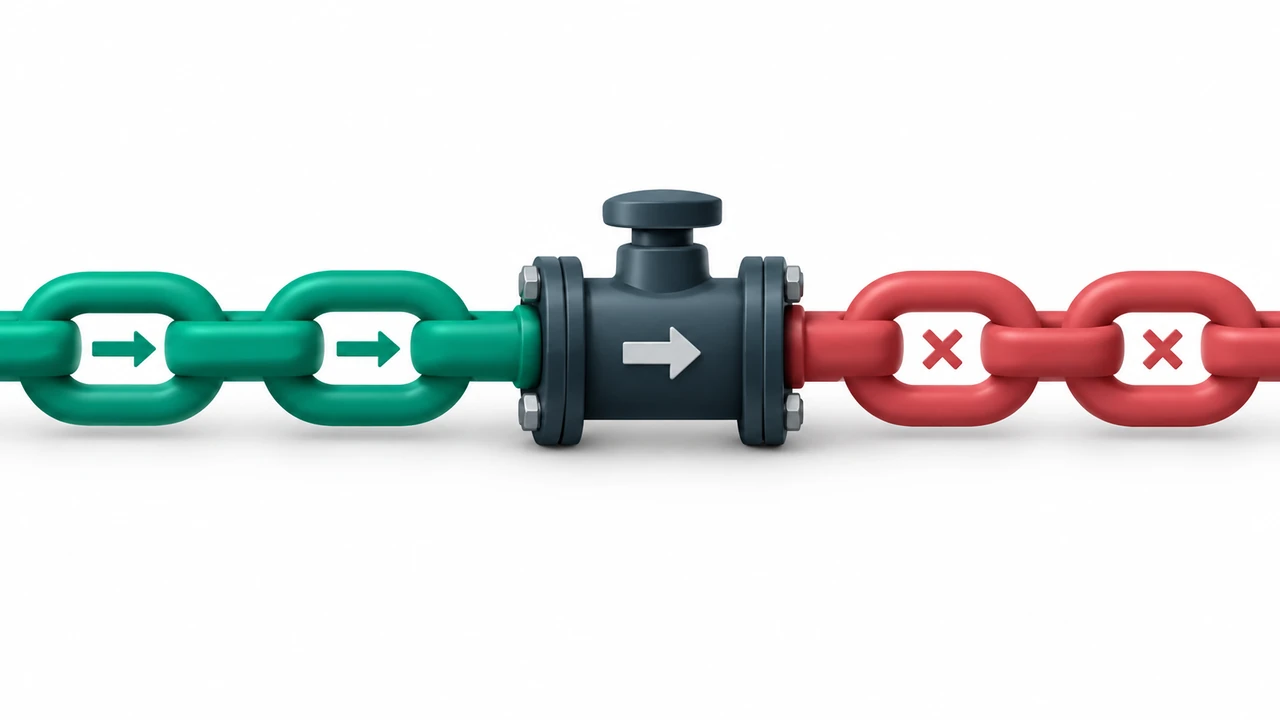
Flexepin sells a prepaid code you buy with cash and type into a cashier once. It credits the moment the cashier accepts it and can receive nothing back, because there is no account sitting behind the PIN. The consequence worth reading for is not the deposit, though — it is that using a voucher hands the choice of withdrawal method to the operator's policy instead of keeping it as yours. This page covers the order of operations that stops a voucher being wasted, where each of the four costs is written down, and what the substitute payout route will demand before it pays.
Pokies Cashout · Payments and terms referencePublished Last reviewed Promotion figures supplied by site owner: 5 October 2026
Form
Prepaid PIN, bearer instrument
Direction
Voucher is deposit-only
Payout route
Set by operator policy, not by you
Reversible
No chargeback, no recall
Expiry
Per the terms on your receipt
What you are buying is a PIN, and that settles most of the questions
Flexepin's product is a code with a face value attached. Not a card, not an account, not a service you hold a login for — a short string of characters worth money until somebody types it somewhere.
A code of this kind is a bearer instrument: the value is the code. No name is attached, no password sits in front of it, no balance can be frozen on your behalf, and nothing ties it to you rather than to whoever holds the characters. Whoever types it first gets the money. That is not a defect in the implementation; it is the design.
Set that against an account rail, where value sits in an account that identifies a person and payment moves between two identified parties. Flexepin removes the identification step deliberately, and with it everything identification was holding up: reversal, a recipient-name check before you confirm, a statement line describing what you bought, and any path for money to travel back the way it came.
The issuing and operating entity is named on Flexepin's own terms pages, and which entity that is can differ by region, as can its regulatory status. Read it there rather than here. What the design does buy on the way in is real: when the cashier accepts the code the balance moves, with no clearing step, batch cut-off or bank business day. That describes the deposit and nothing after it.
Sponsored partners · Display order is not an independent ranking.
18+ only. Availability depends on your location and eligibility. Any promotion is subject to the operator's live terms, including wagering, eligible games, maximum bets, expiry and cashout limits where applicable. Deposit and withdrawal methods, processing times and limits are set by the operator and its payment providers and are not guaranteed here. Offshore operator; not licensed to offer online casino services in Australia. Gambling involves financial risk. Checked: 2026-10-05. 18+. Gambling involves financial risk.
18+ only. Availability depends on your location and eligibility. Any promotion is subject to the operator's live terms, including wagering, eligible games, maximum bets, expiry and cashout limits where applicable. Deposit and withdrawal methods, processing times and limits are set by the operator and its payment providers and are not guaranteed here. Offshore operator; not licensed to offer online casino services in Australia. Gambling involves financial risk. Checked: 2026-10-05. 18+. Gambling involves financial risk.
More than one thing is sold under the Flexepin name
A cashier logo is not a product specification. The Flexepin name beside a deposit button can point at more than one thing, and which one decides whether money can ever travel back on this rail. The common one is the voucher: a PIN off a receipt, spent once, then gone.
Flexepin's own site also lists further products in some markets, including account-shaped and card-shaped ones. Whether any is available to someone in Australia, what verification it requires and whether it can receive an incoming payment are questions for Flexepin's current product pages for your country rather than for an article, because availability by country is revised without notice.
Telling which one a cashier means takes one look at the deposit form. If it asks for a PIN from a receipt, you are using the voucher. If it hands you off to log in, you are being pointed at an account product and the privacy argument below stops applying to you. The form is reliable; the logo is not.
Then check the withdrawal tab separately, because the deposit list and the withdrawal list are different lists and nobody advertises the gap. If the name appears there at all it is not the voucher, since a voucher has no destination to be paid into. The rule underneath: you can have the voucher's privacy or a return path on this rail, not both, because the return path needs exactly the identification the voucher avoids.
More than one thing is sold under the Flexepin name
The retail counter and the online reseller are not the same purchase
Two ways exist to end up holding a code and they are not interchangeable. At a counter you pay cash: nothing records what you spend it on and nothing enters a card network. What you take on in exchange is custody — the slip handed back across the counter has become the thing of value, and it is the only copy of it. Till receipts are thermal paper — they fade, they crease, and a crease across the PIN is as final as losing a banknote.
So photograph it before you leave the shop, keep the paper until the balance has appeared, and do not leave that photo in a camera roll other people scroll through.
Buying online puts a PIN in your inbox without a trip to a shop, and undoes most of the reason for choosing a voucher. You paid by card, so the purchase sits on your statement under the reseller's name — the privacy property is gone while the one-way limitation stays exactly where it was, which is the worst available combination. Resellers also price above face value and each is another party in the chain.
So buy from Flexepin's own store or resellers it lists as official. A code from a marketplace listing or a private seller may have been redeemed before your payment cleared, and whoever typed it first was the legitimate holder as far as the rail is concerned. Record every purchase as you make it: date, seller, amount paid, face value, receipt number. Every dispute below turns on whether that record exists.
Sponsored · WinCrown · 18+
200 free spins on selected slots
WinCrown free-spin offer. Check the eligible slots, qualifying deposit and full promotion conditions.
Read the cashier's minimum before you reach the till
A voucher is bought before it is used and cannot be unbought. That asymmetry makes the order of operations matter more here than on any account rail, where you can simply send a different amount. The sequence runs backwards from how people usually do it: open the cashier first.
Find the minimum deposit for this specific method rather than the site's general minimum, because minimums are set per method and the figure beside a voucher is often not the one beside a card. Note the currency the casino account is denominated in, and any surcharge on this method. Only then go to the shop, and buy a denomination at or above that minimum.
Do the arithmetic rather than eyeballing it. Call the method minimum M and the available denominations D. If the smallest D at or above M sits well above M, the difference is money committed now that you may not use this session. If every D sits under M, this rail cannot fund this cashier, and buying one anyway leaves you holding a code worth less than the threshold it has to clear — a voucher cannot be topped up at the till and a remainder cannot cover a shortfall.
Where this rail turns up in a lobby's cashier at all — Safe Casino and WinCrown are two worth opening before a counter trip rather than after — read whatever the live deposit tab says rather than any figure written elsewhere, since method limits change without announcement. Which operators are worth opening at all is not this site's subject: shortlists and current offers sit on pokiesledger.com.
Conditions are published by the operator and change without notice. Read the live page before you act on anything here.
Reach the cashier by typing the address yourself or opening your own bookmark — not from a message, an ad or a link in an email about a bonus. That matters more on a voucher than on any other rail, because there is no name-confirmation screen between you and the mistake. A bank transfer at least shows a beneficiary name before you confirm; a PIN typed into a page that merely looks right is gone.
Then: select the method, enter the amount, paste the PIN rather than retyping it where the code arrived digitally, and read the confirmation screen before navigating away. Screenshot it. It should state the amount credited and, where the code was not spent in full, what has happened to the remainder. Note the time, and keep the paper receipt until the balance is visibly in the account.
If the cashier errors after the code has been consumed — balance unchanged, code now dead — stop, and do not buy a second voucher to test the theory. You are holding an ordinary operator dispute, and a winnable one: you have the purchase record, the receipt, the timestamp and a screenshot of the failed deposit. Raise it once with all four rather than three times with none.
Do not accept a bonus you have not read in the minutes afterwards. A voucher deposit is as eligible as any other for a clause that caps what can be withdrawn or voids a balance on a bet-size breach, and the one-way nature of the rail softens neither. That arithmetic sits on our bonus terms pages.
Typing the PIN: the deposit sequence in order
The payout route a one-way deposit leaves undecided
The ordinary convention is that an operator returns funds by the route they arrived on, at least up to the amount deposited. On an account rail that is a convenience: you fund with an eWallet and the eWallet is where a payout goes. A voucher does not follow the convention, it breaks it, because the route the money arrived on has no destination capable of receiving a payment.
So the operator substitutes a route under its own policy, and you find out which at the moment you request a withdrawal rather than when you deposit. That is the real cost of the rail and it is not a fee. Your payout method, its minimum, its identity requirements and its timing were all decided for you, by a policy you had not read, on the day you typed a PIN into a cashier.
This inverts the standard advice about matching deposit and withdrawal methods. On an account rail, choosing the deposit chooses the payout. On a voucher it destroys the payout route, and whatever replaces it wants the bank details and identity documents a cash voucher was chosen to avoid. The privacy holds for exactly as long as you are losing.
The fix costs nothing: read the withdrawal tab before you deposit. Three questions settle it. Which methods appear on the withdrawal side at all. Whether the terms state what route is used when the deposit method cannot receive. And what minimum that route carries, since a method-specific minimum above the balance you are likely to hold is a trap of its own.
Sponsored · Safe Casino · 18+
+250% welcome bonus
Safe Casino welcome offer. Check the qualifying deposit, bonus cap, wagering and eligibility before accepting.
What the substitute payout route demands before it pays
Whatever replaces the voucher on the way out will be account-shaped, because only an account can receive money. Bank transfer, a card refund, an eWallet or a crypto address — each carries an identity requirement.
Name matching stalls the most payouts and it is mechanical rather than discretionary. The name on the receiving account has to be the name the institution holds and the name on your verified documents, in the same form. A shortened first name against a full legal name, or a joint account in two names against a profile in one, is enough to stop a payment at the finance stage. Payouts to an account in somebody else's name are normally refused outright.
Then the documents: identity, address, and in some circumstances a source of funds request — where a cash voucher turns sharp. The property that made the deposit private makes that request hardest to answer, because a counter purchase produces the thinnest possible trail of where money came from, and a purchase receipt is not the evidence a salary credit on a statement is.
Verification, the pending window and finance approval all sit in front of any rail and a voucher deposit shortens none of them. Which gives a plain decision rule: if you are not willing to verify your identity and supply account details to this operator, do not deposit, because no path exists on which a payout reaches you without it. The voucher does not postpone that decision, it moves it to the worst moment to discover it.
Four places a cost is written, and how to total them
A round trip has four separate price tags in four places, and only one is visible before you commit. No figures appear below, deliberately: they vary by region, retailer, operator and product, and they are revised.
The purchase margin is first: what you paid against the face value printed on the voucher. A counter may add a service charge and a reseller builds a margin into the price; either way that gap is the cost of the rail itself, paid before you have deposited anything, and the only one of the four you can check in advance across two or three sellers.
The cashier is second: the operator's minimum, maximum and any surcharge on this method, on its banking page. Read it in both tabs, because a surcharge on the way in and a fee on the way out are separate lines and nothing obliges an operator to mention one beside the other.
Currency is third and nobody notices it, because it is not presented as a charge. If the casino account is denominated in something other than Australian dollars, a voucher bought in Australian dollars converts on the way in and again on the way out, with the margin priced into the rate rather than itemised. The fourth belongs to the payout route you did not choose: if the fallback is a bank transfer, that rail has its own inward fees and correspondent deductions, set out on our bank transfer page.
Totalling it is arithmetic, so do it with your own figures before you buy. Price paid minus face value is the entry cost. Add the operator's surcharge for what it cost to get money onto the account, then the fee on the payout route and the conversion spread in both directions, and you have the round trip. On small deposits that stack is a meaningful share of the stake.
Residual balances and the expiry date on the receipt
Two mechanisms account for most voucher money that quietly ceases to exist, and neither is a fee or a dispute. The first is residual value: where a code is not spent in full the remainder has to go somewhere, and where it goes depends on the product and the individual site's implementation rather than a rule you can carry between cashiers.
Read what the confirmation screen says about the balance remaining and screenshot it, because that screen is frequently the only place a remainder is ever displayed to you. Small amounts stranded on partly spent codes are the ordinary way voucher money disappears — undramatically, and unrecoverably.
The second is expiry. The terms attached to your purchase carry a validity period, and it is the only item on this page that arrives in silence and takes the whole remaining balance. There is no notification, and unless the code has been loaded into an account-shaped product there is no balance screen to check. Note the date the day you buy, somewhere you actually look.
Flexepin's own terms for your region are the authority on both: how long a voucher is valid, whether a partial redemption leaves the remainder on the code, and what can be done once a validity period has passed.
Why a code gets refused, and which cause you are looking at
Failures here share one property: the characteristics that make a voucher fast are the ones that remove reversal, so almost nothing can be undone. Identifying the cause is still worth five minutes, because the causes are handled completely differently.
"Code already used" has two causes that look identical on screen and could not be further apart. Either somebody else read your code — photographed at a counter, a receipt in a bin, a PIN in a shared camera roll — or you redeemed it and the cashier failed after consuming it. The second is an ordinary dispute and a winnable one, on the purchase record, receipt, timestamp and screenshot. The first is theft of a bearer instrument, with nothing to recover and nobody holding a balance to freeze.
A refusal reading "invalid code" is a different animal, and most of the time nothing has gone wrong with the voucher at all. Prepaid vouchers of this kind are issued on country-specific programmes and in particular currencies, and a code issued on a programme the cashier is not expecting is rejected as invalid rather than as a mismatch, because the cashier cannot see the difference. Check the receipt and Flexepin's product pages before raising a ticket with an operator who cannot fix it.
Then the one worth being blunt about. Anybody who asks you to read out or send a voucher code is taking cash from you, and no legitimate process requires it — not support, not a verification step, not somebody offering to release a stuck deposit. Australian consumer protection bodies keep standing warnings about demands for payment by prepaid voucher, because the transfer is instant, anonymous and final; Scamwatch is where that advice is published and kept current, and it is worth reading there rather than taking it second-hand. If the request arrived through a channel you did not initiate, the request is the problem.
The cash step, bank gambling blocks and self-exclusion
A cash voucher purchase leaves no gambling descriptor anywhere in your banking records, and it defeats a bank gambling block by design rather than by accident. A block can only act on payments it is able to recognise as gambling, and a purchase at a retail counter is recognised as a retail purchase. BetStop binds licensed Australian wagering providers and does not reach an offshore casino in the first place.
A protection you set and then quietly route around is worse than having set none, because it reads to you as cover while doing nothing. If that describes your situation, the measures that bite on this rail are device-level blocking and not keeping cash set aside for a session, because the bank is not in the transaction at all.
The legal position is short. Operators accepting this method are offshore. Online casino services are not licensed in Australia, and the Interactive Gambling Act 2001 directs its prohibitions at the people providing the service rather than at players. A familiar prepaid product sold over an Australian counter is not Australian authorisation of the site you spend it on.
What this page has not asserted: no operator is named as accepting Flexepin, and no fee, limit, denomination, validity period or issuing entity is quoted, because all of them vary by region and are revised without notice. The live cashier is the only current source for the operator's side, Flexepin's terms for the product's side. How a game behaves once money is on the account is covered on pokiesalmanac.com.
What you are buying is a PIN, and that settles most of the questions — at a glance
Questions people actually ask
Can you withdraw casino winnings to a Flexepin voucher?
No. A voucher is a spend token with no account behind it, so there is no destination for an operator to pay into. Your payout will be routed to whatever method the operator's policy substitutes, and that route will require identity verification and account details. Read the withdrawal tab of the cashier before you deposit to find out what it is.
What happens to my withdrawal method if I deposit with a voucher?
The usual convention is that funds return by the route they arrived on, and a voucher cannot receive, so the convention breaks and the operator assigns an alternate route under its own terms. The method, its minimum, its identity requirements and its timing are decided for you — and you discover which at the moment you request a withdrawal rather than when you deposit.
Why was my Flexepin code rejected as invalid?
Most often a country or currency programme mismatch: a code issued on one programme typed into a cashier expecting another is rejected as invalid rather than as a mismatch. Check the receipt and Flexepin's own product pages for which programme and currency you bought before raising a ticket with the operator, who cannot fix that.
Is a Flexepin voucher refundable if I cannot use it?
Treat it as non-refundable and read Flexepin's own terms for the current position in your region, including the validity period attached to your purchase. This is why the cashier's method-specific minimum should be read before you buy a denomination: a voucher cannot be topped up at the till and a remainder cannot cover a shortfall.
Does a Flexepin deposit show up on my bank statement?
A cash purchase at a counter does not appear at all, because no card network is involved. A voucher bought from an online reseller appears under that reseller's name, which removes most of the privacy reason for choosing a voucher while keeping every one of its one-way limitations.
What does a Flexepin deposit actually cost?
Four things in four places: the margin between what you paid and the face value, the operator's surcharge and minimum on its banking page, conversion margin if the casino account is not denominated in Australian dollars, and the fee on whatever payout route is substituted. Total them with your own figures before depositing, since on small amounts the stack is a meaningful share of the stake.
Will a cash voucher get around my bank's gambling block?
In practice yes, and that is a reason to avoid it rather than a feature. A bank block only acts on payments it can recognise as gambling, and a retail counter purchase is recognised as a retail purchase. BetStop binds licensed Australian wagering providers and does not reach an offshore site either. A protection you route around is cover that does nothing.
Someone asked me to pay them with a Flexepin code. Is that normal?
No. No legitimate process asks you to read out or send a voucher PIN, including support, verification or anyone offering to release a stuck deposit. Australian consumer protection bodies keep standing warnings about demands for payment by prepaid voucher because the transfer is instant, anonymous and final; Scamwatch publishes the current advice. If the request arrived through a channel you did not initiate, the request is the problem.