Casino payout proof: what a screenshot shows and what it does not
A payout screenshot is an image of one interface at one instant. It records what an operator's system displayed to you, not what happened to the money, and the two are routinely treated as the same thing. This page separates the three states people collapse into the word "paid", explains why an image carries almost no weight on its own, and sets out which records do — plus the order to capture them in, before you need them.
Pokies Cashout · Payments and terms referencePublished Last reviewed Promotion figures supplied by site owner: 5 October 2026
What a screenshot proves
What you were shown
What it does not prove
That funds moved
Strongest records
Third-party, identifier-bearing
Capture point
Before the request, not after
What a payout screenshot actually captures on screen
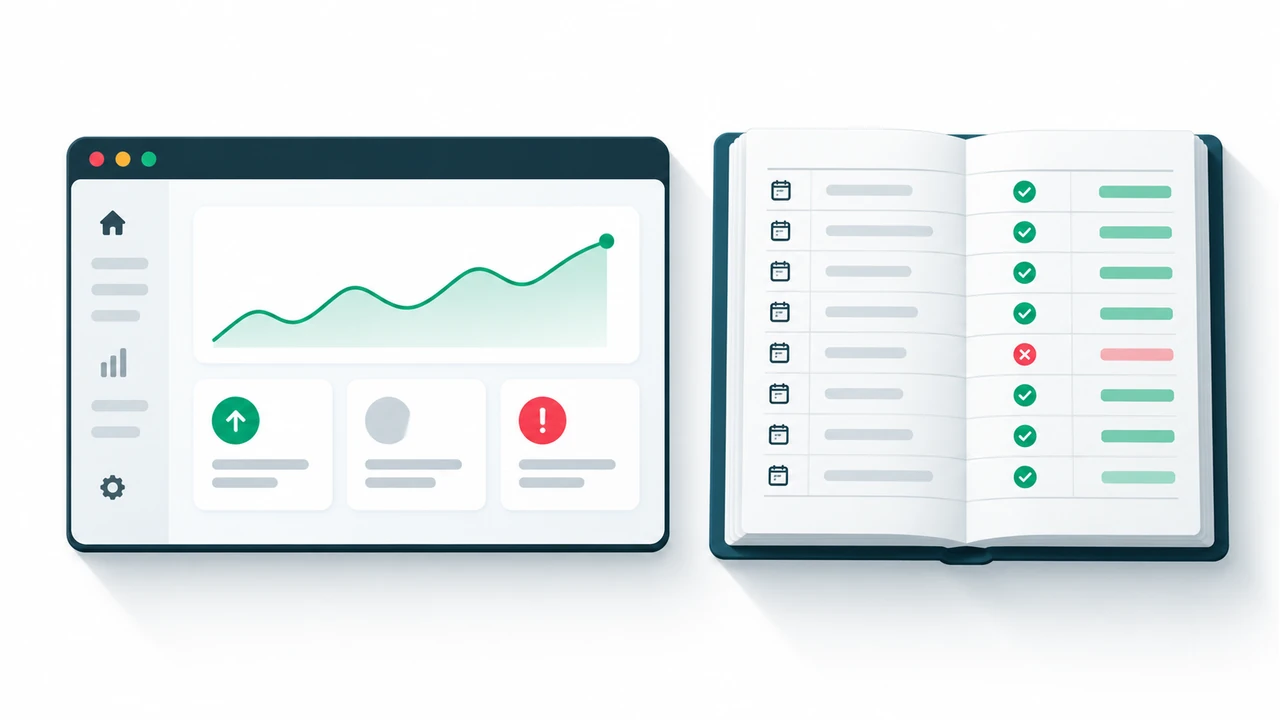
A screenshot freezes one rendering of one page at one moment. What it contains is a status string the operator's own software chose to display to your session, plus whatever else happened to be in frame. It is a record of a display, not of a payment, and every argument about payout proof turns on that gap.
Which fields survive the crop decides whether the image is usable at all. The ones that do work are the account identifier or email the session was logged into, the withdrawal reference or transaction number, the exact amount, the named method, the status label verbatim, and the page URL. A crop showing a large number and the word "completed" discards precisely the fields anyone reconciling the request would search on.
There is one job an image does well, and it is worth naming because it justifies taking them at all: it fixes a figure or a term that the live page can change. Withdrawal minimums, per-method fees, pending windows and bonus conditions are edited without notice, and the version you agreed to is only recoverable if you captured it. That is a different claim from "the operator paid me".
What it is not: it is not a bank record, not a receipt, not an instruction to any payment rail, and not evidence that money left anyone's account. Treating it as the centre of a dispute file is the single most common reason a complaint goes nowhere, because the first party you show it to can read their own system and does not need your picture of it.
Sponsored partners · Display order is not an independent ranking.
18+ only. Availability depends on your location and eligibility. Any promotion is subject to the operator's live terms, including wagering, eligible games, maximum bets, expiry and cashout limits where applicable. Deposit and withdrawal methods, processing times and limits are set by the operator and its payment providers and are not guaranteed here. Offshore operator; not licensed to offer online casino services in Australia. Gambling involves financial risk. Checked: 2026-10-05. 18+. Gambling involves financial risk.
18+ only. Availability depends on your location and eligibility. Any promotion is subject to the operator's live terms, including wagering, eligible games, maximum bets, expiry and cashout limits where applicable. Deposit and withdrawal methods, processing times and limits are set by the operator and its payment providers and are not guaranteed here. Offshore operator; not licensed to offer online casino services in Australia. Gambling involves financial risk. Checked: 2026-10-05. 18+. Gambling involves financial risk.
Approved, processed, credited: three states, one status word
Behind the colloquial "they paid me" sit at least three distinct events, and a screenshot usually captures only one of them while being read as though it captured all three.
Approved or accepted means the operator's finance and compliance stages signed the request off internally. Processed or sent means an instruction was handed to a payment rail — a card scheme, a bank transfer, a wallet credit, a chain transaction. Credited means the money is spendable in your account. Hours or days can sit between the second and the third, and the second can be stated while the third never occurs.
Which status string maps to which event is build-specific. Some cashiers show a two-stage flow, some four; words like "processing", "in progress" and "completed" are not standardised across operators and sometimes not across methods on the same operator. Read the cashier's own legend or the withdrawal clause in the terms, and if the mapping is not stated, ask support in writing which internal stage the label refers to and keep the answer.
The decision rule falls out of that. A screenshot reading "processed" with no corresponding credit is a payments-side question — which rail, which beneficiary details, which reference, has it been returned — and it needs the records in the next sections rather than a louder version of the same image. A screenshot reading "pending" is not a payout at all, and on operators that allow reversal it can still be unwound by your own action, which the pending and reversal page covers separately.
Approved, processed, credited: three states, one status word
Why an image alone carries almost no evidential weight
An image file is editable by anyone, with free tools, in minutes. Browser developer tools let a visitor rewrite any number or status on a page before capturing it, and the result is pixel-identical to a genuine capture. There is no signature, no server attestation and nothing binding the picture to the account it appears to show.
Everyone you might present it to knows that. The operator reads its own database. Your bank reads its own ledger. A complaints body asks the operator for its records. None of them weighs your rendering of a page above the system that produced it, so a file built around screenshots is a file built on the least persuasive material available.
That does not make capture pointless — it makes it supporting material. The image carries you through a conversation accurately: exact reference, exact amount, exact wording, exact date, with no reliance on memory. It also pins what you were shown at a moment when what you were shown is itself disputed, which is the one scenario where it does real work.
The practical test for any piece of evidence is whether a third party can re-obtain it without your help. A bank statement line can be pulled again from the bank. A transaction hash can be looked up by anyone. An email can be produced from the sending server's side. A screenshot cannot be re-obtained by anybody, which is exactly why it is discounted.
Sponsored · WinCrown · 18+
200 free spins on selected slots
WinCrown free-spin offer. Check the eligible slots, qualifying deposit and full promotion conditions.
Other people's payout screenshots in forums and feeds
Most payout screenshots a reader encounters are not their own. They appear in forum threads, chat groups and social feeds as the argument for or against an operator, and they are the weakest form of the weakest tier: an unverifiable image, from a stranger, with no account behind it that anyone can check.
Four things are missing from every one of them, and each is decisive. The terms the balance was built under, including whether a bonus was ever attached and what cap applied. The verification state of that account, which is where most delays actually sit. The elapsed time between request and credit, as opposed to the single frame shown. And whether the credit ever landed at all, since the capture is almost always taken at the approval or processing stage rather than at the bank.
There is also a supply problem. Affiliate programmes and operator promotions reward posted wins, so the population of visible screenshots is selected for the outcome being advertised rather than drawn from what happens generally. Absence of complaint screenshots is not evidence of absence either, because a person stuck mid-dispute has nothing photogenic to post and usually posts text instead.
Used properly they are a prompt, not a conclusion. A thread claiming a method pays quickly is worth one action: open the operator's own withdrawal tab and read the stated minimum, fee and method list for yourself. Judging operators against each other is pokiesledger.com's subject rather than this site's, and a screenshot thread is a poor substitute for either.
Conditions are published by the operator and change without notice. Read the live page before you act on anything here.
Timestamps, time zones and the clock in the corner
A capture can contain two clocks that disagree: whatever time the page printed, generated by the operator's server in whatever zone it is configured for, and whatever time your own device shows. Neither is labelled with its zone in most interfaces, and your device clock is as editable as the rest of the image.
That matters because almost every payout argument is a timing argument. Australian readers sit across AEST, AEDT, ACST, ACDT and AWST depending on state and season, while a cashier may print UTC or a European server time without saying so. A request that looks like it was lodged on Tuesday in one zone can be a Monday request in another, and the same ambiguity reverses the direction of a "within 24 hours" claim.
Business-day boundaries sharpen it further. Finance approval queues, bank cut-offs and batch windows all run on a working calendar, so an hour either side of a boundary can move a payout by a day or more — the weekend processing page handles that mechanism on its own.
The fix is to anchor timing to something that carries its own independent timestamp. An email from the operator has full headers with server-stamped times. An SMS has a carrier timestamp. A bank statement line has a posting date the bank will stand behind. Capture at least one of those beside the screenshot and the clock question stops being arguable.
Timestamps, time zones and the clock in the corner
The records that actually carry weight, ranked
Three criteria separate strong records from weak ones: the record was issued by a party other than you, it carries its own identifier that someone can look up, and it can be re-obtained independently if your copy is lost. Everything below is ranked on those three.
Strongest tier. The transaction line on your bank or card statement, with the posting date, the amount and the descriptor the acquirer sent. The paying bank's remittance advice for an incoming transfer, which names the sender and any deductions taken in transit. For a crypto payout, the transaction hash — publicly verifiable by anyone, showing the amount, the destination address and the confirmation time, which makes it the one payout record a reader can check without trusting either party. And the operator's own confirmation email, kept with full headers rather than forwarded as text.
Middle tier. An export of your in-account transaction history as a file rather than a picture, since it carries the operator's own structure and field names. A live chat transcript emailed to you by the operator's system at the end of the session, which is stronger than a transcript you copied out. A support ticket number, which at least obliges the operator to locate its own thread.
One record people overlook sits between the tiers: the descriptor that appears on your own statement beside the credit. It is written by the paying institution rather than by the operator, it frequently names a processor with no visible relationship to the brand, and it is the string your bank will search on if you later need the payment traced. Copy it exactly, including any reference digits, rather than paraphrasing it as the brand name, because a paraphrase is unsearchable.
Weak tier, and worth knowing it is weak. Screenshots. Forum and social posts, including other people's. A verbal assurance from an agent with no reference attached. When you ask the operator for anything, ask for the item from the first tier that fits — "please provide the remittance advice and the transaction identifier for this payment" is a request they can either answer or visibly fail to answer, which is itself informative.
Sponsored · Safe Casino · 18+
+250% welcome bonus
Safe Casino welcome offer. Check the qualifying deposit, bonus cap, wagering and eligibility before accepting.
Each payment rail has one identifier that makes a payment findable, and asking for the wrong one wastes the exchange. An operator can answer "it was processed" indefinitely without ever handing over something your own bank can search on, so the request that works names the rail and the identifier together.
Card payouts carry a wrinkle worth knowing before you go looking. On the card rails a payout is often not a fresh payment but a credit pushed back to the card that funded the account, which means it can appear on a statement as a reversal against the original debit rather than as an incoming amount of its own. For proof purposes it may therefore not look like a payout at all: it can arrive under the original merchant descriptor, sit beside the deposit it offsets, and in some builds become visible only once the statement posts rather than in the pending list. The identifier to request is the acquirer's reference for that credit, the string the card scheme attaches to the transaction, because it is what a bank can trace. Whether the card rails are open to you in the first place is a separate matter that the credit card ban page deals with.
A bank transfer is findable from four things together: the sender's name exactly as the paying bank transmitted it, the amount, the value date and any reference carried in the payment message. The single document that contains all four is the remittance advice, and the trace your bank can raise depends on having them rather than on your description of the payment. Where the transfer crossed a border, the amount credited can differ from the amount sent for reasons priced into the rate rather than itemised as a charge, which the currency conversion page covers on its own.
E-wallets and crypto introduce a second event that is routinely mistaken for the first. A payout into a wallet is one transfer; moving that balance from the wallet to your bank is another, and the operator's record stops at the first. "Paid" can be entirely accurate about the first while the money is actually sitting at the second, which makes it a question for the wallet provider or exchange rather than for the casino. Keep the identifiers for both legs separately: the operator's transaction reference and the wallet's own incoming-transaction ID for the first leg, then the wallet's withdrawal reference and your bank's posting line for the second.
For a chain payout the first leg produces the most checkable record discussed anywhere on this page — a transaction hash that anyone can look up, showing the amount, the destination address and the confirmation count, with no need to trust either party. Its limits are precise ones. It evidences arrival at an address, not that the address belongs to you, and it says nothing at all about the second leg from exchange to bank.
None of these identifiers settles entitlement, and conflating the two is how a payments question turns into an unanswerable argument. An identifier establishes that a payment exists and makes it locatable; whether the amount was correct, and whether the payout should have been approved at all, are argued from the terms instead. Getting the right identifier first is what separates those two questions, which is most of the reason to do it before raising a complaint rather than during one.
What to capture, in order, before you request a payout
The useful captures almost all happen before anything goes wrong, which is why people rarely have them. Work the sequence once and it becomes routine.
Before requesting: the withdrawal tab in full, showing the method list, the per-method minimum and maximum, any stated fee and any threshold that redirects larger amounts to a different rail. The verification status on your profile. If a bonus was ever active on this balance, the bonus terms as they read now, because max cashout and wagering clauses are what a refused payout is most often argued under.
At the moment of requesting: the confirmation screen, whole page and URL included, with reference, amount, method and destination as the cashier recorded them. Then the confirmation email, left in the mailbox rather than screenshotted out of it.
After requesting: each status change as it appears, with its timestamp, and then the receiving side — the bank line, the wallet credit or the chain transaction. If you hold accounts at Safe Casino or WinCrown, the same rule applies as anywhere: the cashier's own withdrawal tab and transaction history inside the logged-in account are where these records would be found, and whatever each build exposes at the time is the only authority on its own fields and labels.
Assembling a chain from cashier screen to bank statement
A chain beats a collection. Request reference and amount from the cashier, the same reference in the confirmation email, the same amount in the operator's transaction history, and a credit on your statement that reconciles to it — each link independently checkable, each one naming the next. One missing link is a specific, answerable question; a pile of screenshots is not.
Reconciling the amount is where most chains break, and arithmetic settles it faster than argument. Work it with round numbers of your own rather than any operator's published figures, since fees vary by operator, method and build. Suppose an approved amount of 1,000, a fee of 15 stated on the withdrawal tab, two correspondent deductions of 20 and 18 on an international transfer, and an inward fee of 15 from your own bank. Expected credit: 1,000 − 15 − 20 − 18 − 15 = 932. A credit of 932 means the chain closes and nothing is missing.
A credit of 880 leaves 52 unexplained, and the next step is not a complaint but a question with a number in it: which published charge accounts for 52. If there was a currency conversion, the margin is priced into the rate rather than itemised, so compare the rate applied against the mid-market rate for the posting date — that comparison often explains the whole gap and appears nowhere as a fee line.
When a link is genuinely missing, name the link. "The operator's history shows processed on this date with this reference; my bank has no corresponding credit; please provide the remittance advice and transaction identifier" is a sentence either side can act on. "You never paid me" is not, and it invites a reply that the system says otherwise.
Where the records go, and what each route asks for
The operator's own complaints process comes first, in writing, as one claim with the chain attached and a single question at the end. Use the complaints or disputes clause in the terms for the address and the stated response window, keep every reply, and do not restart the matter in live chat, which fragments the record you just built.
Your own bank handles the payments-side half. For an incoming transfer that never arrived, a bank can raise a trace on a payment it can identify, and for that it needs the date, the exact amount, the sender's name as the paying bank sent it and any reference. What a bank cannot do is compel an offshore operator to pay, or reverse a transfer out on your instruction after it has settled — the chargebacks page covers what the card rails do and do not reach here.
The licence and any dispute-resolution body named in a site's footer are worth reading sceptically rather than hopefully. Check whether the named body publishes a complaints procedure of its own, whether it lists the operating company as a current member, and whether its remit covers payment disputes at all. Some do run a genuine process; a logo in a footer establishes none of it.
There is no Australian route. ACMA's position is that online casino services cannot lawfully be provided to people in Australia, so every operator in this category is offshore, there is no Australian licence to appeal to and no Australian complaints scheme with jurisdiction over the operator. That is the structural reason these records matter more here than they would domestically: the file you built is close to all the leverage there is.
What no record can fix, and how to keep what you have
Set expectations honestly before building a file. A complete, well-ordered chain improves the odds of a payment being located and released, and it costs little. It does not create a legal remedy where none exists, and no quantity of evidence overrides a term you accepted — a max cashout cap, a breached max bet rule or a failed verification will be answered with the clause, not with the clause being waived because your records are tidy.
Keep records in formats that survive. Print pages to PDF so the URL and date are in the output, keep original image files rather than re-shared copies, and leave emails in the mailbox as well as exporting them, because the headers are the part with evidential value and forwarding strips the useful ones. Store a copy somewhere other than the device that took them.
Redact with care and send through the right channel. Full card numbers, full document images and anything beyond the last four digits belong only in the operator's own secure upload if they belong anywhere — never in live chat, never in an email attachment to an address you cannot verify, and never to anyone who contacted you offering to recover a stuck payout, which is a pattern the scam warning signs page sets out.
What this page does not assert: no payout time, fee, limit or success rate is stated here, and no operator is described as paying or not paying. Those figures are per-operator, per-method and changeable, so the authoritative sources are the live cashier and withdrawal terms for the operator's side and your own bank's fee schedule and statement for yours. Operator shortlists and bonus offers are pokiesledger.com's subject, and how a given game's mechanics, RTP and volatility work is pokiesalmanac.com's.
What a payout screenshot actually captures on screen — at a glance
Questions people actually ask
Does a casino payout screenshot prove I was paid?
No. It proves what the operator's interface displayed to your session at one moment. An image file can be edited by anyone, including through browser developer tools, so the operator, your bank and any complaints body will weigh their own records above your picture of a page. Use the screenshot as supporting material and build the claim on a bank statement line, a remittance advice, a transaction hash or an email with full headers.
The cashier says processed but nothing arrived. What does that mean?
Processed or sent usually means the operator handed an instruction to a payment rail, not that the money is in your account. The gap between those two events can be hours or days, and an instruction can also be returned. Ask the operator in writing which internal stage the label refers to, and request the transaction identifier and remittance advice so your bank can look for a payment it can identify.
What records should I ask the operator for?
The ones issued by someone other than you and carrying their own identifier: the transaction identifier for the payment, the paying bank's remittance advice showing the sender and any deductions, and for a crypto payout the transaction hash. Also ask for your transaction history as an exported file rather than a screen, and have any live chat transcript emailed to you by their system.
Why does the timestamp on my screenshot not settle the timing?
Two clocks can appear in a capture — the operator's server time, in whatever zone it is configured for, and your own device clock — and neither is usually labelled with its zone. Australian readers also sit across several zones with and without daylight saving. Anchor timing instead to something independently stamped: an email's headers, an SMS, or a bank posting date.
Less arrived than my payout was approved for. How do I check it?
Reconcile with arithmetic rather than argument. Start from the approved amount, subtract the operator's stated fee for that method, any deductions taken in transit on an international transfer, and your own bank's inward fee from its fee schedule. If a gap remains, compare the exchange rate applied against the mid-market rate for the posting date, since a conversion margin is priced into the rate and never appears as a fee line.
Are other people's payout screenshots on forums worth anything?
As evidence, almost nothing. They are unverifiable images posted by strangers, are commonly posted as promotion, and tell you nothing about the terms, the verification state or the bonus history behind the balance shown. Operator comparisons belong on pokiesledger.com rather than in a screenshot thread.
Can I complain to an Australian regulator if a payout is refused?
No. ACMA's position is that online casino services cannot lawfully be provided to people in Australia, so these operators are offshore, there is no Australian licence to appeal to and no Australian complaints scheme with jurisdiction over them. Your routes are the operator's own complaints process, any dispute body genuinely named in its licence, and your bank on the payments side.
What should I capture before I even request a withdrawal?
The withdrawal tab in full, showing the method list, minimums, maximums, any stated fee and any threshold that redirects larger amounts to another rail; your verification status; and the bonus terms if a bonus ever touched the balance. Those are the figures most likely to be edited later, and they are what a refusal is usually argued under.