Casino dispute resolution: the escalation sequence and where it ends
A withheld payout escalates along a fixed ladder, and each rung reaches a different party with different powers. Most complaints fail not because the ladder is short but because the claim arrives at the wrong rung, in the wrong form, with the wrong material attached. This page sets the sequence out in order — support, the operator's written complaints route, the dispute body named in the licence, the licensing authority itself, and the parallel payments track through your own bank — what each one can compel, and the point past which nothing compels anything. Every operator in this category is offshore, and that single structural fact shapes the whole route.
Pokies Cashout · Payments and terms referencePublished Last reviewed Promotion figures supplied by site owner: 5 October 2026
First rung
Written complaint, not chat
What decides it
The clause and the file
Parallel track
Your bank, payments only
Australian jurisdiction
None over the operator
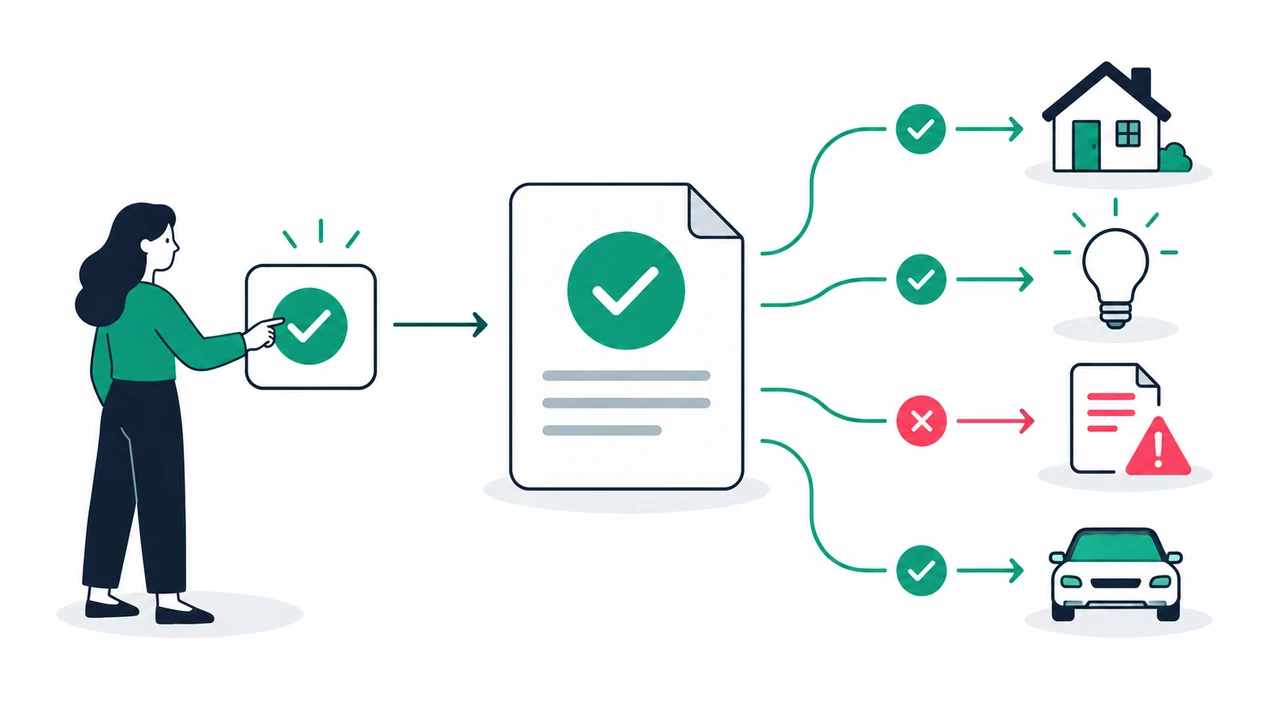
Four different disputes arriving under one word
Four distinct matters reach an operator as a complaint and they do not share a destination. A payments fault is money the operator says it sent that your bank has never received. An entitlement decision is a refusal to pay at all, with a clause named. A conduct complaint concerns how the account was handled — a restriction, a term applied after the event, a promotion settled differently from how it read. A regulatory report concerns the operator offering the service to you in the first place.
Classification is the first move, because each class is answered with different material by a different party. A payments fault is settled with identifiers: transaction reference, remittance advice, posting date, with your bank doing half the work. An entitlement decision turns on the wording you accepted and the figures recorded at the time. A conduct complaint turns on the message sequence. A regulatory report will not return your money and is not designed to.
One question separates the first two. Has the operator said it paid? If it has and the money is absent, a payment exists somewhere and the question has a factual answer. If it has said it will not pay, payments evidence is irrelevant, because nothing entered a rail — the argument is about a term. The ask differs accordingly: "provide the transaction identifier and the remittance advice" against "identify the clause and the recorded figures you relied on".
Misfiling costs weeks. A clause refusal taken to a bank produces a dispute the bank has no power to adjudicate. A missing transfer taken to a licensing body produces a referral back to the operator that your own bank could have answered sooner. Decide which of the four you hold, write the claim for that one, and where you genuinely hold two, run them as two claims on two tracks rather than one message blending both.
Sponsored partners · Display order is not an independent ranking.
18+ only. Availability depends on your location and eligibility. Any promotion is subject to the operator's live terms, including wagering, eligible games, maximum bets, expiry and cashout limits where applicable. Deposit and withdrawal methods, processing times and limits are set by the operator and its payment providers and are not guaranteed here. Offshore operator; not licensed to offer online casino services in Australia. Gambling involves financial risk. Checked: 2026-10-05. 18+. Gambling involves financial risk.
18+ only. Availability depends on your location and eligibility. Any promotion is subject to the operator's live terms, including wagering, eligible games, maximum bets, expiry and cashout limits where applicable. Deposit and withdrawal methods, processing times and limits are set by the operator and its payment providers and are not guaranteed here. Offshore operator; not licensed to offer online casino services in Australia. Gambling involves financial risk. Checked: 2026-10-05. 18+. Gambling involves financial risk.
The ladder rung by rung, and who each rung reaches
Rung one is the operator's own support channel, which reaches an agent with read access and a script. Rung two is the operator's written complaints route, which reaches whoever that operating company has designated internally. Rung three is the alternative dispute body named in the licence or the footer, which reaches a third party whose power over the operator comes from the licence condition rather than from any statute you can invoke. Rung four is the licensing authority itself.
Running alongside, not inside, that ladder is the payments track: your own bank or card issuer, and through them the scheme or the correspondent chain. It answers a different question — where a specific payment went — and it can proceed at the same time as rungs one to three without waiting for them.
What each rung can actually do narrows sharply as you climb. Support can locate a record and escalate. The internal complaints route can release a held payment, reverse an internal decision, or decline with a clause. A dispute body can issue a finding and, where the licence makes its decisions binding on the operator, press for compliance. A licensing authority can act against the licence — which is leverage over the operator's business, not an order enforceable by you.
Climb in order and do not skip. Rung three almost always requires evidence that rung two was used and either answered or allowed to lapse, and a complaint submitted out of sequence is commonly returned unexamined. The sequence is also what builds the file: each rung produces a dated written record that the next rung reads as the history of the matter.
The ladder rung by rung, and who each rung reaches
Rungs one and two: support chat, then the written complaint
Live chat has one use — locating a record and getting a ticket number — and several failure modes. Transcripts frequently are not retained on your side, agents are not the people who decide entitlement, and a matter raised and dropped across several sessions reads later as nothing at all. If you use chat, use it to ask one factual question, then ask the operator's system to email you the transcript rather than copying it out.
The written complaint is the first step with weight. The complaints or disputes clause in the terms gives the address and, usually, a stated response window; use that address rather than general support, and send one claim rather than a thread. Set out the account identifier, the dates, the exact amounts, the reference numbers, what the operator stated and when, and close with a single question that can be answered yes or no.
Ask for the decision in a form you can escalate. "Please confirm the clause relied on and the figures recorded against this account at the time, and treat this as a formal complaint under your complaints procedure" obliges either an answer with a clause in it or a visible failure to produce one. A reply that restates policy without naming a clause is itself useful material at the next rung.
Do not reopen the matter in chat after the complaint is in. Two parallel threads let the operator answer the easier one, and the dispute body reading the file later cannot tell which account of events is the claim. Keep the complaint on one channel, date-stamped, with each reply retained in the mailbox rather than forwarded as text — forwarding strips the headers that carry the server-stamped time.
Sponsored · WinCrown · 18+
200 free spins on selected slots
WinCrown free-spin offer. Check the eligible slots, qualifying deposit and full promotion conditions.
Rung three: the dispute body named in the footer, and how to test it
Offshore licences commonly require an operator to name an alternative dispute resolution scheme, and the name usually appears in the footer or in the complaints clause. That naming is the whole basis of the body's authority over the operator. It is not a consumer protection statute, it is a contractual and licensing arrangement between the operator and its regulator, and its reach stops where that arrangement stops.
Test the named body before you rely on it, with four checks. Does it publish a complaints procedure of its own, including what it will and will not examine? Does its own register list this operating company — the legal entity in the terms, not the brand — as currently covered? Does its remit extend to payment and bonus disputes, or only to specified categories? And does it publish decisions, which tells you whether it functions at all. A logo establishes none of these.
Where the checks pass, submit in the form the body asks for. These schemes generally require the operator to have been given its own chance first, a stated period to have elapsed, and the claim to arrive within a deadline measured from the operator's final reply — the figures for all three are published in that body's own procedure and vary between schemes, so read them there rather than assuming. A late or out-of-sequence submission is normally refused on that ground alone.
Where the checks fail — no register entry, no published procedure, a remit that excludes your matter — treat rung three as absent and move to rung four. An operator naming a scheme that does not list it is itself a point worth putting in writing to the licensing authority, because the naming is a licence condition rather than decoration.
Conditions are published by the operator and change without notice. Read the live page before you act on anything here.
Rung four: the licensing authority and the limits of its orders
The authority named in the footer licenses the operating company, and its interest is in whether licence conditions were met — complaints handled as required, funds held as required, terms applied as published. Your matter reaches it as evidence about the licensee's conduct, which is a different frame from a claim for your money, and the frame changes how the submission should read.
Verify the licence before submitting. Every serious authority runs a public register; look up the company name from the terms rather than the brand, and check the status and the scope of the entry. A licence number printed on a page is not a register entry, brands are frequently operated by a different entity from the one named in the footer, and an expired or surrendered licence means rung four does not exist for this operator.
What an authority can do is act on the licence: require remediation, impose conditions, sanction, suspend or revoke. What it cannot do is function as a small claims court for you, enforce a payment against a company outside its jurisdiction, or compel anything from an operator it does not license. Where the figure is the whole point, that distinction matters more than the existence of the regulator.
Submit to the published complaints or enforcement address, reference the matter, attach the chain of correspondence and state plainly which licence condition you say was not met. Keep the submission factual and short on adjectives. If you hold accounts at Safe Casino or WinCrown, the complaints clause and whichever dispute body and authority each site names would be found the same way as on any offshore site — through the terms page linked from the footer of the logged-in lobby — and whatever a given build publishes there at the time is the only authority on its own escalation route.
Rung four: the licensing authority and the limits of its orders
The parallel payments track: your bank and the rail
Your bank answers one question well: where did a payment it can identify actually go. For an incoming transfer that never landed, a bank can raise a trace, and for that it needs the date, the exact amount, the sender's name as the paying bank transmitted it, and any reference. That is a payments enquiry, not a complaint about the operator, and it proceeds on its own timetable.
On deposits out, the card rails run a separate mechanism with its own reason codes, deadlines and consequences, including what happens to your account and your balance when a dispute is lodged — that is the chargebacks page's subject rather than this one's. The short point for escalation purposes is that a chargeback is an argument between two banks about a transaction, and it is not an appeal against a refusal to pay out.
Several rails offer no dispute mechanism at all. A settled on-chain transfer cannot be recalled by anyone; a voucher or prepaid rail spent into an account typically has no reversal path; a push payment you authorised is, by design, final. Knowing in advance which of your methods carries a recall route and which does not is part of choosing the destination, not something to discover during a dispute.
Run the payments track in parallel but keep it separate in writing. Do not tell the operator you are disputing the payment with your bank while asking it to release the same funds, and do not present a bank trace result as a finding about entitlement. Each track produces a document; the file is stronger when each document says only what its issuer actually determined.
Sponsored · Safe Casino · 18+
+250% welcome bonus
Safe Casino welcome offer. Check the qualifying deposit, bonus cap, wagering and eligibility before accepting.
The Australian routes that cannot reach an offshore operator
ACMA's position is that online casino services cannot lawfully be provided to people in Australia. Every operator in this category is therefore offshore: there is no Australian licence behind it, no Australian authorisation to appeal to, and no Australian complaints scheme with jurisdiction over the company. That is the structural ceiling on the whole ladder and it should be understood before the first message, not discovered at the fourth rung.
The consequences are specific rather than vague. A report to an Australian body can prompt action against access to a service, which is a regulatory outcome, not a payment to you. A domestic financial complaints scheme covers the conduct of your own Australian bank or card issuer, not the conduct of an offshore operator. A state gambling regulator licenses venues and operators within its own jurisdiction, which these are not.
That still leaves two domestic things worth doing, and they are about your own side of the transaction. If the complaint is that your Australian bank mishandled a payment, a trace or a dispute, that is squarely a matter for your bank's internal complaints process and the domestic scheme above it. If the concern is that gambling has stopped being discretionary, the self-exclusion register is a separate, domestic and immediately effective step with nothing to do with any payout.
Read the practical consequence honestly. The leverage in an offshore dispute is the operator's interest in its licence, its dispute-body standing and its public record — which is why a well-ordered written file addressed to the right rung is close to the whole of it. No Australian route substitutes for that, and anyone who tells you otherwise, particularly anyone offering to recover funds for a fee, is describing something that does not exist.
The clauses a payout complaint usually dies on
Most refusals are not arbitrary; they cite a term, and a dispute body will read that term before it reads your account of events. Five clauses account for the bulk of them. A maximum cashout cap limiting what can be withdrawn from a bonus balance regardless of the balance shown. A maximum bet rule breached by a single spin while a bonus was active. Duplicate or multiple account provisions. Verification and source-of-funds requirements left unmet. Irregular play or bonus abuse definitions.
What makes those clauses effective is that each has an objective test the operator can evidence from its own logs: a stake size, an account match, a document state, a wagering figure. A complaint that disputes the clause as unfair rarely moves; a complaint that disputes the fact — this stake was placed after the bonus balance was cleared, this document was submitted on this date — is a factual argument with a route to a finding.
The decision rule before escalating: find the clause yourself, in the version of the terms you accepted, and test your own case against it honestly. If the operator's facts are right and the clause says what it says, escalation will restate it. The arithmetic behind the cashout and wagering clauses is set out on this site's bonus terms pages, and the specific figures always come from the live terms attached to your own account rather than from any general guide.
Where a clause is not in the version you accepted, that is the strongest entitlement argument available — which is why capturing the terms at the time matters far more than arguing later. Changed figures, added caps and new restrictions are all routine, and the only person who can show what the page said when you deposited is the person who kept a dated copy of it.
Reconciling the disputed amount before anyone argues about it
A dispute with a number in it outperforms a dispute with a grievance in it, and the number has to be yours. Do the arithmetic before the first message, using figures you have read on the operator's own withdrawal tab and in your bank's fee schedule — fees, minimums and deductions vary by operator, method and build, so no general figure substitutes for the ones attached to your own transaction.
Worked through with illustrative round numbers, none of them any operator's published charge: an approved payout of 2,000, a stated operator fee of 25, two correspondent deductions of 20 and 18 on an international transfer, and an inward fee of 15 from your own bank. Expected credit: 2,000 − 25 − 20 − 18 − 15 = 1,922. A credit of 1,922 closes the chain and there is nothing to dispute. Substitute the figures from your own withdrawal tab and fee schedule and the method is identical.
A credit of 1,700 leaves 222 unexplained, and the escalation question writes itself: which published charge accounts for 222. If a currency conversion occurred, the margin is priced into the rate rather than itemised as a fee, so compare the rate applied against the mid-market rate for the posting date — that comparison regularly accounts for the entire gap and appears nowhere as a line item.
Where a bonus balance is involved the arithmetic runs the other way: cap first, then wagering, then the withdrawable figure. If a cap applies to the bonus portion, the amount in dispute is the capped figure rather than the balance the account displayed, and a complaint built on the displayed balance is answered with the cap. Establish which figure you are actually claiming before you claim it.
The file that decides the outcome, assembled before rung one
Three criteria separate records that carry weight from records that do not. The record was issued by someone other than you. It carries an identifier a third party can look up. And it can be re-obtained independently if your copy is lost. Everything you gather should be scored against those three, because that is roughly how a dispute body scores it.
Strong material: the bank or card statement line with its posting date and descriptor, copied exactly including reference digits rather than paraphrased as the brand name; the paying bank's remittance advice naming the sender and any transit deductions; for a crypto payout the transaction hash, which anyone can verify without trusting either party; and the operator's own emails kept with full headers. An exported transaction history file sits just below these.
Weak material: screenshots, which an image editor or a browser's developer tools can produce identically; forum and social posts, including other people's; and verbal assurances with no reference attached. Screenshots still earn their place for one job — pinning a figure or a term that the live page can change — and the payout proof page sets out what an image does and does not establish.
Order it as a chain rather than a pile. Request reference and amount in the cashier, the same reference in the confirmation email, the same amount in the operator's history, and either a reconciling credit on your statement or a visible absence of one. One missing link stated precisely is a question any rung can act on. A folder of material with no sequence invites a reply that the operator's system says otherwise.
Deadlines, silence, and what no rung can achieve
Every rung above the operator runs on deadlines, and they are measured from events rather than from your convenience — typically from the operator's final response or from the elapse of its own stated window. The specific periods are published in each dispute body's procedure and each authority's complaints guidance, they differ between schemes, and they are the most common reason a well-founded claim is refused without examination. Read them at the start, not when you need them.
Silence is itself a stage, and the terms usually define it. If the complaints clause states a response window and it passes with nothing, that lapse is normally what entitles you to go to rung three — so record the date the complaint was sent, the date the window expired, and the absence of any reply. An operator that answers on the last day resets nothing; an operator that never answers has handed you the next rung.
What no rung can achieve: none of this creates a legal remedy where none exists, and no quantity of evidence overrides a term you accepted and demonstrably breached. A dispute body cannot seize funds. A licensing authority cannot order a payment to you. An offshore company that stops responding, closes, or rebrands leaves no domestic forum with jurisdiction to pursue it, and a withheld amount can simply remain withheld.
Two things follow. First, the controllable part of this is almost entirely upstream: verification cleared before the payout, terms captured on the day, destinations tested with a small withdrawal, bonus caps read before the balance exists. Second, be alert to the pattern that targets people mid-dispute — approaches offering to recover a stuck payout for an upfront fee, which the scam warning signs page covers, where no further payment ever releases a first one.
The figures this page leaves to the source, deliberately. Response windows, escalation deadlines, fees and processing times are set per operator and per scheme and they change between builds, so read them where they are published and binding — the operator's live terms and cashier, the named dispute body's own procedure, the licensing authority's public register, and your own bank's fee schedule. Nothing above establishes authorisation under Australian law for any operator, and no dispute body or authority is rated here as effective or otherwise. Treat all of it as general information about contract terms and account administration rather than legal or financial advice on your own position; where the disputed sum is large enough to matter, paid advice on the actual contract will outperform any further reading. Operator shortlists and bonus offers belong to pokiesledger.com; how a given game's mechanics, RTP and volatility work belongs to pokiesalmanac.com. This is adult activity, and no part of it is a way to make money.
Four different disputes arriving under one word — at a glance
Questions people actually ask
What is the first step if a casino refuses to pay out?
A written complaint to the address in the operator's complaints or disputes clause, not a live chat session. Set out the account identifier, dates, exact amounts and reference numbers, state what the operator said and when, and ask it to confirm the clause relied on and the figures recorded at the time. That reply, or its absence inside the stated window, is what the next rung reads.
Can an Australian regulator make an offshore casino pay me?
No. ACMA's position is that online casino services cannot lawfully be provided to people in Australia, so these operators are offshore. There is no Australian licence to appeal to and no Australian complaints scheme with jurisdiction over the company. Domestic routes cover your own bank's conduct and self-exclusion, not the operator's.
How do I check whether the dispute body in the footer is real?
Four checks. Does it publish its own complaints procedure and the categories it will examine? Does its register list the operating company named in the terms, not just the brand, as currently covered? Does its remit include payment and bonus disputes? Does it publish decisions? A logo in a footer establishes none of those, and a scheme that does not list the operator is itself worth reporting to the licensing authority.
Should I go to my bank or to the operator first?
It depends which dispute you have. If the operator says it sent the money and your bank has no credit, that is a payments question and the bank can trace a payment it can identify — run that in parallel. If the operator refuses to pay on a clause, your bank cannot adjudicate the term and the matter belongs in the operator's complaints route.
How long do I have to escalate a casino complaint?
Each dispute body and licensing authority publishes its own deadlines, usually measured from the operator's final reply or from the expiry of the operator's own stated response window, and they differ between schemes. Read the periods in that body's published procedure at the start of the matter. Missing the deadline is a common reason a sound claim is refused without examination.
Which clauses do payout complaints most often fail on?
Maximum cashout caps on bonus balances, maximum bet breaches while a bonus was active, duplicate account provisions, unmet verification or source-of-funds requirements, and irregular play definitions. Each has an objective test the operator can evidence from its own logs, so disputing the fact works better than disputing the fairness. The cap and wagering arithmetic is covered on this site's bonus terms pages.
Are screenshots enough to win a dispute?
On their own, no. An image can be produced identically with an editor or a browser's developer tools, and every party you show it to reads its own system instead. Screenshots are supporting material; their real job is pinning a figure or term the live page can change. Build the claim on statement lines, remittance advice, transaction hashes and emails with full headers.
Someone offered to recover my withheld payout for a fee. Is that legitimate?
Treat it as a scam pattern aimed specifically at people mid-dispute. No additional payment releases a withheld one, nobody can compel an offshore operator on your behalf, and the approach usually ends with your identity documents and more money gone. Keep the matter on the written channels you control and send documents only through the operator's own secure upload.