Minimum withdrawal amounts and the balance that cannot move
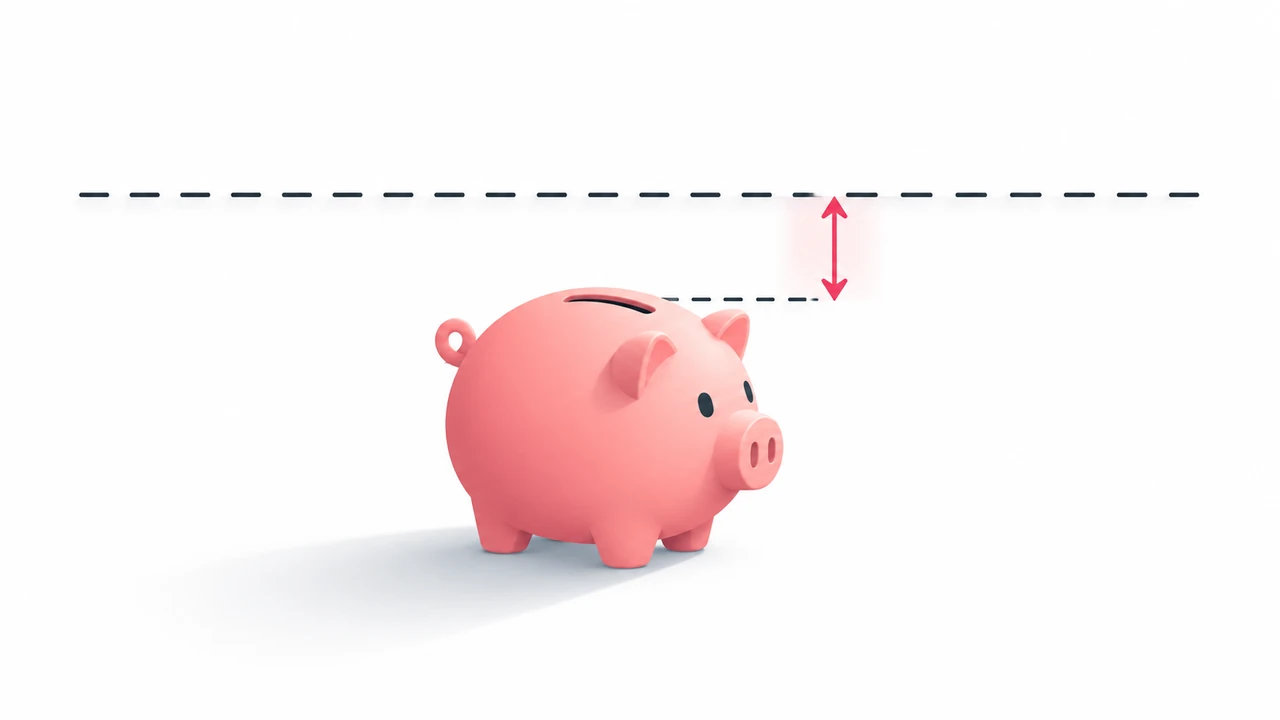
A minimum withdrawal is a condition on the request, not a threshold an account grows into. The cashier compares the amount you type against a floor published for the rail you selected, and a short request is refused at validation — nothing is queued, nothing is reviewed, and the balance stays where it was. That leaves a sum that is real, visible and unable to leave. This page covers which of four screens holds the figure that binds, why the floor tracks the payment rail rather than the account, the arithmetic that strands a remainder, and the four exits available to money under the line. Every figure involved varies by operator, rail and currency, so what follows names the screen holding the authoritative version rather than printing a stale one.
Pokies Cashout · Payments and terms referencePublished Last reviewed Promotion figures supplied by site owner: 5 October 2026
Applies to
Each request, per method
Binding source
Live cashier withdrawal tab
Varies with
Rail, currency, account status
Operators
Offshore — not AU licensed
The floor is tested against the request, not the account
The test happens at submission. You choose a method, type an amount, and the cashier checks it against the minimum published for that method. Fall short and the form refuses on the spot: no ticket is raised, no payments team sees it, nothing for support to chase. A floor is a validation rule in front of the payout process, not a stage inside it.
Because the test reads the request rather than the account, the two can disagree. A balance well above the floor still fails where part is not withdrawable — unconverted bonus funds, an amount locked against unfinished turnover, an unsettled bet, a slice already pending. A balance below the floor cannot produce a valid request at any size.
Floors exist because moving money costs mostly a fixed amount per transaction: a processor charge, a correspondent bank's handling, a network fee on a chain, often a human glance before release. Below some amount a payout costs the operator more than it carries. Where each operator draws that line is a commercial decision on its own cashier page.
Four figures get collapsed into one in casual use. The minimum deposit is what you must put in. The minimum withdrawal is the floor per request. The withdrawal limit is the ceiling. The maximum cashout is a bonus clause capping what a promotion-derived balance can become. Only the second refuses a small request. Wording varies too — minimum payout, min. cash out, threshold — and searching a terms page for "minimum" alone surfaces the deposit clause.
Sponsored partners · Display order is not an independent ranking.
18+ only. Availability depends on your location and eligibility. Any promotion is subject to the operator's live terms, including wagering, eligible games, maximum bets, expiry and cashout limits where applicable. Deposit and withdrawal methods, processing times and limits are set by the operator and its payment providers and are not guaranteed here. Offshore operator; not licensed to offer online casino services in Australia. Gambling involves financial risk. Checked: 2026-10-05. 18+. Gambling involves financial risk.
18+ only. Availability depends on your location and eligibility. Any promotion is subject to the operator's live terms, including wagering, eligible games, maximum bets, expiry and cashout limits where applicable. Deposit and withdrawal methods, processing times and limits are set by the operator and its payment providers and are not guaranteed here. Offshore operator; not licensed to offer online casino services in Australia. Gambling involves financial risk. Checked: 2026-10-05. 18+. Gambling involves financial risk.
Four screens, four versions of the same number
The figure is published in several places, the versions drift, and only one is enforced. The withdrawal tab of the live cashier, rail selected and account logged in, is the binding one: it is generated from the configuration the validation runs against. Read it before you deposit, not after you have won.
The banking or payments help page is the version most often quoted back at you — a general table written once, covering methods the operator may no longer offer. It can be right. It has no mechanism for being right, which is a different thing.
The general terms carry a third version and, more usefully, the clause governing change: the sentence reserving the right to amend limits without notice, and any clause tying the applicable figure to the version in force at the time of the request. That is why a screenshot of last month's help page settles nothing, and why the one worth taking is of the cashier as you submit.
Support chat is the fourth, and it is a statement rather than a document. Ask which page it comes from, whether it applies to your currency, and whether it is per request or per day, then save the transcript. Where sources disagree, assume the system enforces the cashier. If you are reading this with a lobby open — Safe Casino and WinCrown are two that Australian players reach through comparison pages — the governing figure sits on that cashier's withdrawal tab beside the specific rail, and nothing here describes what either site currently publishes.
Four screens, four versions of the same number
Why a bank floor and a crypto floor are different numbers
The floor tracks the rail, which is why one account shows several minimums at once. Five properties move it: the fixed cost of a transfer, the settlement currency and any conversion, the smallest unit the rail can move, the manual handling a payout needs, and exposure to later reversal. Cheap, same-currency, automated and final gives the lowest floor.
Bank rails sit at the predictable end. A domestic transfer has a known per-item cost and a fixed settlement path, so its floor tends to be stable and quoted in your account currency; an international transfer adds correspondent handling that someone pays for.
Card payouts carry an Australian complication that is regulatory rather than commercial. Where a card return path exists it is frequently capped at the amount deposited to that card, pushing the tail of a larger balance onto a second rail with a second floor — the commonest reason a player holds a remainder they did not plan for.
Crypto rails relocate the problem rather than removing it. Network fees vary with congestion and chains enforce their own smallest transferable amounts, so a floor exists whether the operator sets one or not. One wrinkle is specific: the floor may be quoted in the coin rather than in dollars, so its dollar equivalent moves while you decide. Floor and network fee are separate deductions and both apply.
Prepaid vouchers have no payout floor because there is no payout: they are commonly deposit-only, so a balance funded that way leaves on another rail the operator chooses, and that rail's floor is the one you meet. Account status shifts the number too — currency, verification state and sometimes a loyalty tier are permitted inputs.
Sponsored · WinCrown · 18+
200 free spins on selected slots
WinCrown free-spin offer. Check the eligible slots, qualifying deposit and full promotion conditions.
One floor against three balances: the arithmetic written out
Write the test as a line and it stops being mysterious. Let F be the published floor for the rail, B the balance, and P the portion not currently withdrawable. A request succeeds only where B minus P is at least F. The numbers below are illustrative, chosen to show the shape of the arithmetic, and are not any operator's figures.
Case one, the plain shortfall. Floor 50, withdrawable balance 32. The gap is 18 and nothing about the request closes it: a smaller request fails the same test, a request for 50 fails for insufficient funds.
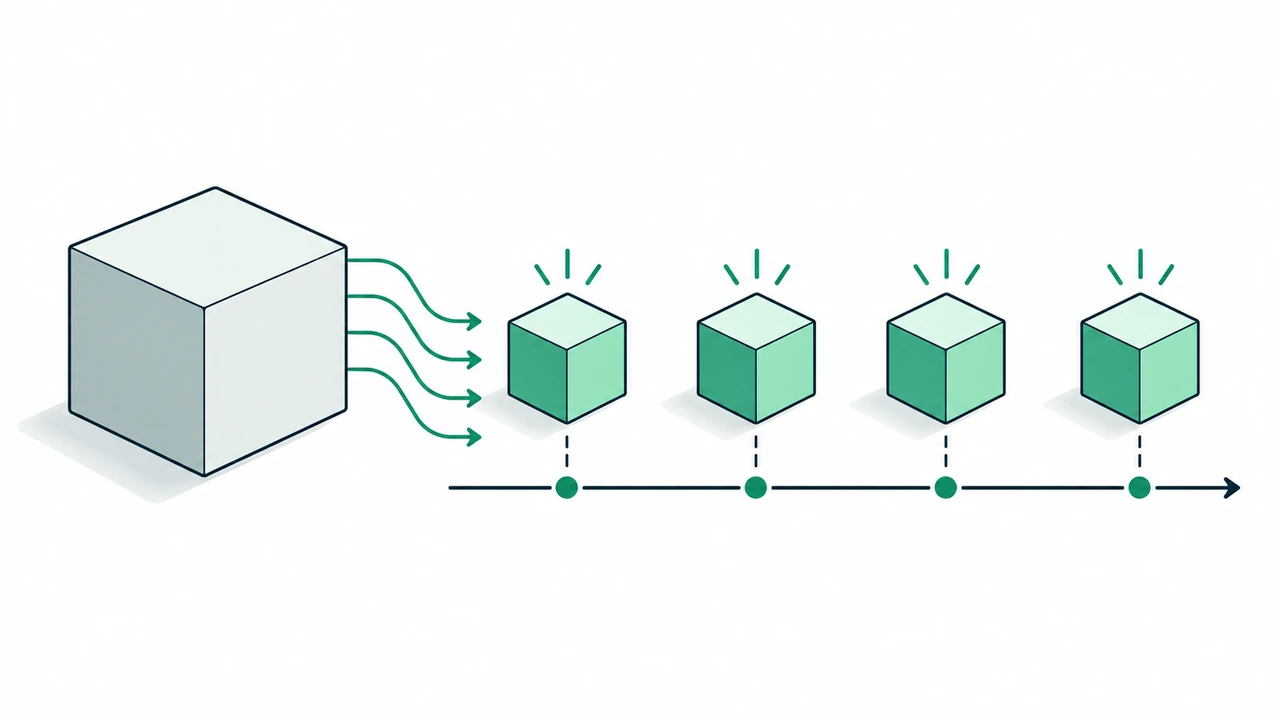
Case two, the stranded tail, which catches more people. Floor 50, per-request ceiling 100, balance 120. The first request takes 100; the remainder is 20, under 50, so the second is refused and the tail is stuck. Split it 60 and 60 instead and both slices clear. Plan the last slice first.
Case three, the fee that moves the line. Floor 50, balance 55, a flat fee of 8. The floor is tested on the gross requested, so 55 validates and 47 arrives. A flat charge takes its largest proportional bite at the bottom, which makes a payout at the floor the worst value that rail offers. Two rules follow: divide the expected balance by the ceiling and check the remainder against the floor; and subtract the worst applicable fee before making a near-floor request.
Conditions are published by the operator and change without notice. Read the live page before you act on anything here.
Four things that can happen to a balance under the line
There are four exits and no fifth, and knowing them beforehand keeps the choice from being made for you by whichever agent answers. The first is to top the balance up with your own deposit until it clears the floor. It works, and it is worth naming: converting a payout into a purchase at the one moment you have a reason to agree. Read whether the new deposit carries a condition, since a deposit that triggers an offer can place the whole balance under turnover, and whether a closed-loop rule now routes the payout back to the method you just used.
The second is to play the balance through. The honest version: this changes the amount in one direction or the other and does nothing to improve the chance of reaching the floor, since no pattern of staking alters a game's designed return. How a game's return and volatility are structured is pokiesalmanac.com's subject.
The third is to ask for a manual payout as an exception. Some terms permit discretion to release a sub-minimum balance, usually on closure and usually once. Ask in writing and ask whether a fee applies — an exception payout with a flat fee can consume most of a small balance.
The fourth is closure, and it is the exit to read first because it sets your downside. Clauses vary: some return residual balances by means the operator chooses, some retain amounts under the minimum, and some are silent — silence being discretion by default.
Four things that can happen to a balance under the line
When a cashout ceiling sits below the withdrawal floor
The most complete way to be stuck is to satisfy every condition a promotion imposes and still hold a balance no request can move. It happens when a bonus clause caps the balance at a figure that does not clear the cashier's floor — two correct numbers never shown together.
The mechanism: let C be the maximum cashout in the promotional terms and F the floor for your rail. If F is at least C, the best outcome the promotion permits is a balance you cannot request. Nothing warns you, because the promotion page is drafted against one document and the floor against another.
No-deposit offers are the acute version, since the operator funded the whole balance and there is none of your own money to lift the total over the line. A matched-deposit offer usually clears the floor on your stake alone, which is why the collision stays invisible until you claim something free.
The check belongs before acceptance. Note the ceiling and whether it is per promotion, per day, or aggregated across every offer the account has claimed, then open the cashier withdrawal tab, select the rail you would use, and note the floor. If the ceiling is not comfortably clear of it, the offer's best case is a locked balance. One further interaction: where a bonus converts in stages, the withdrawable portion can sit well under the displayed total, and the floor is tested against the portion.
Sponsored · Safe Casino · 18+
+250% welcome bonus
Safe Casino welcome offer. Check the qualifying deposit, bonus cap, wagering and eligibility before accepting.
Gross request, net arrival: two measurement points
The floor is applied to what you ask for; fees are applied on the way out. Conflating the two is how a payout that validated cleanly arrives smaller than expected.
Five deductions can appear between them, and they stack: an operator processing fee, a per-method fee beside the rail, an intermediary charge on international transfers, a network fee on a chain, and a conversion spread wherever balance and receiving currencies differ. The first two are on the cashier page; the third is your receiving bank's to disclose and often shows only on the statement; the fifth is charged at the operator's rate and is most often left out of a comparison.
Conversion can apply twice — a deposit converted into a non-AUD balance and a payout converted back is two spreads on the same money, and neither is a fee in the sense the cashier page uses the word. A rail that looks cheapest on its stated fee can be dearest once the spread is counted.
Many operators allow a number of free withdrawals per period and charge for the rest. Read the unit — per month, per calendar month, per rolling thirty days — and what counts against it, since a cancelled request may or may not consume an allowance. Then run the net test the cashier will not: take the floor, add every fee that could apply at that size, and ask whether what arrives justifies the request.
Splitting a payout, and the rule that punishes the last slice
Splitting is usually forced rather than chosen: a per-request, daily, weekly or monthly ceiling means a balance above it leaves in instalments.
The rule people miss is that every slice is tested against the floor independently. There is no concession for the final instalment of a sequence the ceiling itself created, so the remainder after the last full slice is the part at risk. Size from the bottom up: decide the smallest slice first, confirm it clears, then distribute the rest.
Cost multiplies with the count. A fee per request means four requests cost four fees, and a free allowance can be exhausted halfway through a sequence, so a balance split finely enough to respect every ceiling can lose more than the same balance released in two larger pieces across two periods.
A second hazard sits in holding several requests open at once. Where an operator keeps requests in a reversible pending state, every open slice stays reversible for as long as that window runs, so a sequence extends the exposure rather than clearing it. The practical order: read ceiling and floor on the same screen, divide, check the remainder, resize so the smallest slice clears, then submit the first.
The first request is also the first identity check
Clearing the floor is one gate and not the only one. A first withdrawal typically triggers verification in full, and the document set does not usually scale with the amount, so a payout at the minimum attracts the same checks as a large one. Planning around the floor while ignoring this is how a cleared floor becomes a request sitting untouched.
Name matching is the condition that most often stops a small first payout. The receiving account, card or wallet is expected to belong to the account holder, so a joint account or a partner's card can fail even where the money's origin is not in question. On crypto rails the equivalent check is the address itself — no name attached and no recovery if it is wrong.
The closed-loop rule interacts with the floor directly. Where terms require funds to return by the deposit method, up to the amount deposited, your rail is chosen for you and so is its floor. Someone who deposited by a method that cannot pay out discovers the substitute rail and its minimum at the worst moment.
Larger balances can add a source of funds request, a different exercise from identity verification and a longer one. The procedural fix costs nothing: verify on the day you fund the account, while nothing is pending and no one is waiting on you.
Dormancy, closure, and disputing the figure applied
A sub-floor balance is not static. Inactivity clauses permit a charge against an account unused for a stated period, and a balance too small to request is the one most likely to sit untouched. Read the clause for the period, the charge, and what resets the clock — login, deposit, or a settled bet.
Closure is usually the better move once the remainder is not worth chasing. Ask in writing for release, name the figure and the rail, and keep the reply. Where closure is for self-exclusion, residual handling is often a separate clause — but BetStop, the National Self-Exclusion Register, binds licensed Australian wagering providers and does not reach an offshore casino.
If the floor applied is not the floor published, establish which figure the system used before writing anything. Reproduce the refusal, capture the cashier screen with the rail selected, and note the timestamp and exact message — a refusal for insufficient withdrawable funds is a different fault from one for being under the minimum. Then raise it in writing rather than in chat, quoting the page you relied on, the figure applied, and the rail involved. Ask for the current figure and the date it changed; many of these resolve as a stale help page.
Escalation needs realistic expectations. Any authority in the footer is offshore, and ACMA's position is that online casino services cannot lawfully be provided to people in Australia — so there is no Australian licence behind the operator and no Australian regulator positioned to recover your funds. A chargeback is not a payout route either: it disputes a payment you made, not a withdrawal you were refused. A published floor applied as published is enforceable; one applied differently is a documentation dispute a screenshot may win.
What this page does not state
No minimums, fees, ceilings or timeframes are printed here. Not because they are unimportant — they are the whole subject — but because they are set per operator, per rail and per currency and change without notice. A figure restated on a third-party page is an invention with a reference number; the live cashier withdrawal tab is the only source correct by construction.
No operator is ranked or compared here, and none is named as carrying a lower floor than another: which operators publish which conditions belongs to pokiesledger.com (operator shortlists and bonus offers). Nor does it describe game behaviour: payout percentages, variance and feature design belong to pokiesalmanac.com (game mechanics, RTP, volatility). The single point made about play here is that staking a balance up to a floor is not a technique.
Operators offering online casino games to people in Australia do so from offshore. Nothing here establishes authorisation under Australian law, and clearing a minimum does not establish that a withdrawal will be approved — verification, bonus conditions and the operator's own checks sit alongside the floor and each can refuse independently. Adults only, and gambling is not a way to make money.
The floor is tested against the request, not the account — at a glance
Questions people actually ask
What is the minimum withdrawal at an online casino?
There is no single figure. It is set by the operator for each payment method and can also depend on your account currency and verification status, which is why one account can show several different minimums at once. The version enforced is the one on the live cashier withdrawal tab with your rail selected; the general help page and the terms often carry older numbers, and the terms usually reserve the right to change them without notice.
What happens if my balance is below the minimum withdrawal?
The request is refused at validation, so nothing is queued and there is nothing for support to process. Four options remain: deposit enough of your own money to clear the floor, play the balance through, ask in writing whether the operator will release a sub-minimum balance as an exception, or close the account and rely on the closure clause. Read that clause first, because it tells you what the balance is worth if you do nothing.
Why is the minimum different for each payment method?
Because the cost and friction of moving money differ by rail. A fixed per-transfer charge, a currency conversion, a chain's network fee and smallest transferable unit, manual handling, and exposure to later reversal all push the number up. Rails that are cheap, same-currency, automated and final tend to carry the lowest floor on an account; international transfers and anything needing a human step tend to carry the highest.
Can a bonus cashout cap be lower than the minimum withdrawal?
Yes, and it is the most complete way to be stuck. The maximum cashout sits in the promotional terms and the floor sits on the cashier page, and no screen shows them together. If the cap does not clear the floor for the rail you would use, satisfying every condition still produces a balance no valid request can move. Write both figures side by side before accepting an offer.
Does the minimum apply before or after fees?
The floor is tested on the gross amount you request; fees come off afterwards, so what arrives is smaller than what validated. Where the fee is a flat charge per request, it takes its largest proportional bite from a payout at the floor, which makes a minimum-sized withdrawal the worst-value one available on that rail. Add every applicable fee to the floor before deciding whether the request is worth making.
How do I avoid being left with a remainder I cannot withdraw?
Size the last slice first. Divide the balance by the per-request ceiling, check what is left over against the floor, and if the remainder falls short, redistribute so the smallest slice clears it. Each instalment is tested against the floor independently and there is no concession for the final one, even though the ceiling forced the split. Then count the fees the resulting number of requests will attract.
Will a small withdrawal still need verification?
Normally yes, and in full. The document set requested on a first withdrawal does not usually scale with the amount, so a payout at the minimum attracts the same checks as a large one, including a receiving account or wallet matching the account holder's name. Completing verification on the day you deposit removes the delay from the moment it would otherwise cost you something.
What can I do if the minimum applied is higher than the one published?
Capture the cashier screen with your rail selected and the timestamp, record the exact refusal message, and raise it in writing rather than in chat, quoting the page you relied on and the figure applied. Most cases resolve as a stale help page. Note the limits of escalation: any authority in the footer is offshore, ACMA's position is that online casino services cannot lawfully be provided to people in Australia, and no Australian regulator is positioned to recover funds from an offshore operator.