Proof of payment method: what each rail is asked to evidence
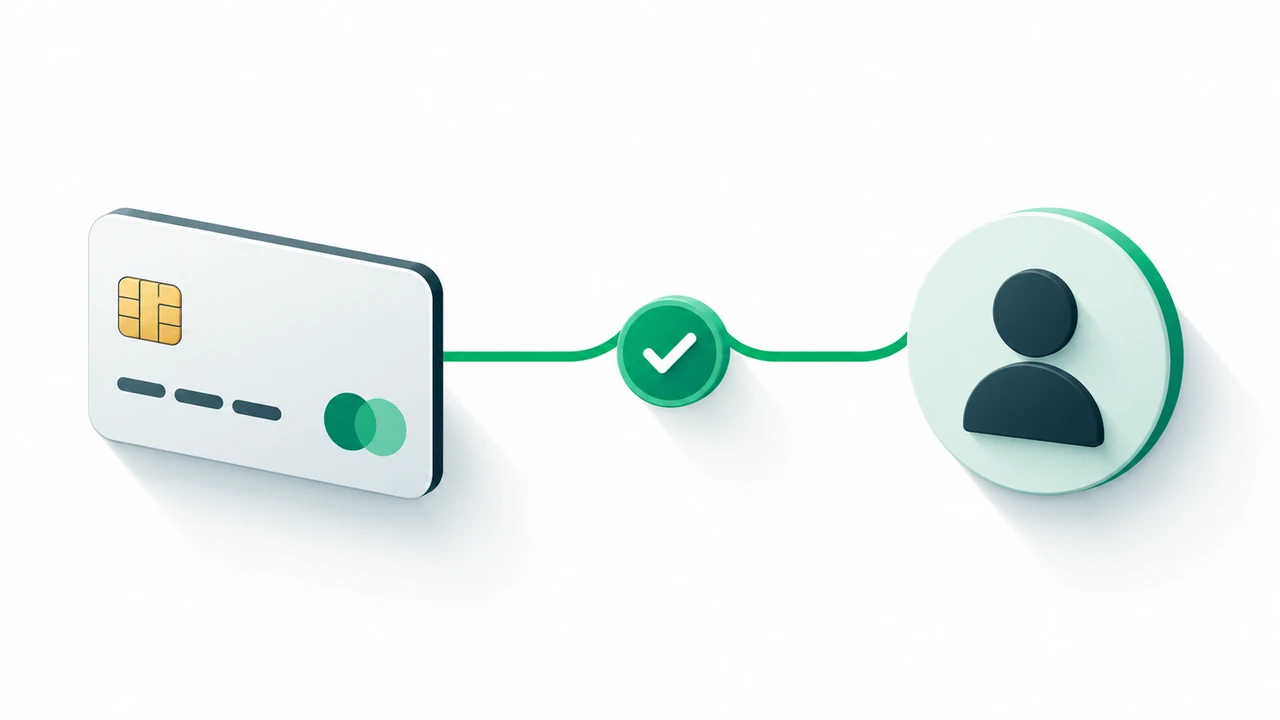
A payment method proof is not another identity document. Identity checks ask who you are; a method proof asks whether the card, bank account or wallet that funded the deposits belongs to you and is one you control. That is why the file list handed to you at a withdrawal has little to do with your passport and everything to do with the rail you deposited on — a card attracts one set, a statement another, a voucher a third, and a payment from somebody else's account attracts a refusal rather than a document list. This page sets out what each rail is asked to evidence, what the checker is reading in the file you send, which fields stay visible and which get covered, and the order of steps that moves all of it out of the week a payout is waiting.
Pokies Cashout · Payments and terms referencePublished Last reviewed Promotion figures supplied by site owner: 5 October 2026
Proves
Control of the instrument, not identity
Set by
The rail you deposited with
Binding source
The request inside your own account
Operators
Offshore — not AU licensed
Why the deposit rail decides which documents are asked for
The request you receive is generated from your own transaction history rather than read off a fixed checklist. Whatever funded the account is what has to be evidenced, so two players verified to the same standard can be handed entirely different lists. Read your deposit history first and the request stops looking arbitrary.
Behind it sits the closed-loop principle: funds are expected to return by the method that sent them, up to the amount that method sent. To route a payout back, the operator has to satisfy itself the destination belongs to you. Proof attaches to each rail used, so an account funded from four sources can be asked to evidence four instruments.
Reversal exposure is the second driver. A card payment can be disputed long after it settles, a bank transfer can be recalled, and a wallet's own funding source can be charged back behind it. Rails carrying that risk attract heavier proof than rails where settlement is final, which is why a crypto deposit and a card deposit are never asked for comparable evidence.
The third driver is the anti-money-laundering question of whose money it is. A deposit arriving from an account in another name is not a documentation gap a player can close with a better photograph; it is the thing the rule exists to catch. What follows is organised by rail, since the rail generates the requirement.
Sponsored partners · Display order is not an independent ranking.
18+ only. Availability depends on your location and eligibility. Any promotion is subject to the operator's live terms, including wagering, eligible games, maximum bets, expiry and cashout limits where applicable. Deposit and withdrawal methods, processing times and limits are set by the operator and its payment providers and are not guaranteed here. Offshore operator; not licensed to offer online casino services in Australia. Gambling involves financial risk. Checked: 2026-10-05. 18+. Gambling involves financial risk.
18+ only. Availability depends on your location and eligibility. Any promotion is subject to the operator's live terms, including wagering, eligible games, maximum bets, expiry and cashout limits where applicable. Deposit and withdrawal methods, processing times and limits are set by the operator and its payment providers and are not guaranteed here. Offshore operator; not licensed to offer online casino services in Australia. Gambling involves financial risk. Checked: 2026-10-05. 18+. Gambling involves financial risk.
The three questions every method proof has to answer
Strip the wording away and each proof is read for three things: that the instrument exists, that it is the one that made the deposits on this account, and that the person named on it is the account holder. A file answering two of the three is incomplete, and most rejections are a missing third answer rather than a bad photograph.
Existence is the easy part and the only part a screenshot settles alone. Linkage is harder: the file has to carry something matchable against the operator's own record of the transaction — a last four digits, an account number's tail, a wallet identifier, a voucher serial. A file with the identifying portion blacked out proves existence and nothing else.
Ownership is where the rails diverge sharply. A bank statement carries a name. An embossed card carries a name. A wallet account carries a verified name field. A blockchain address carries nothing at all, which is why that rail is evidenced in a completely different way.
A fourth question appears on larger balances and is a separate exercise: where the money came from before it reached the method. That is a source of funds request, it is not satisfied by proving ownership, and the page on it sets out what is usually asked.
The three questions every method proof has to answer
Photographing a card: which digits stay covered and which must show
A card proof is normally a photograph of the physical card, front and sometimes back, with some fields visible and others deliberately hidden. The instructions sound contradictory until you see what each field is for: the visible ones answer linkage and ownership, the hidden ones are the data that would let a stranger transact.
Visible as a general rule: the cardholder name, the expiry, the first six digits and the last four. Covered: the middle digits, and on the reverse the security code and usually the signature strip. The exact combination is the operator's to state and it does vary, so follow the instruction in your own request rather than a general rule read elsewhere, including here.
Never send a full card number, a security code or a PIN, as an image or as text, on any channel including a chat window that looks official. A legitimate check does not need them, and a request for them is one of the signals the scam warning signs page covers. An upload showing them by accident is the wrong image and should be replaced.
Cards with no embossed name are the common failure, and digital-only cards are the same problem with nothing to photograph. Many cards print nothing on the face, and a card behind Apple Pay or Google Pay has no face at all, so the proof shifts to the issuing account's app: a view showing the holder's name beside the same last four digits.
Sponsored · WinCrown · 18+
200 free spins on selected slots
WinCrown free-spin offer. Check the eligible slots, qualifying deposit and full promotion conditions.
Bank statements and transfer receipts: what the checker reads
A bank document answers all three questions at once when it is the right document, which is why it is the fallback for nearly every awkward case. What makes it the right one is four fields on the same page: the institution, the holder's name, enough of the account number to match the operator's record, and the deposit transaction.
A full statement period is usually acceptable and a single transaction view usually is not, because a one-line receipt rarely carries the name. Covering unrelated amounts is commonly allowed; covering the name, the account tail or the deposit line defeats the purpose of sending it. The accepted documents page covers redaction in detail.
Real-time rails complicate the receipt. An Osko or PayID transfer produces a confirmation inside your banking app rather than an exportable statement line the same day, and the confirmation may name the recipient as a payment processor rather than the casino. That is ordinary, and better noted in the upload than left for the checker to query.
A PayTo agreement is a different artefact again: it sits in your banking app with its own identifier, and where deposits were funded that way the agreement screen can be the cleanest linkage evidence available.
Business and joint accounts raise the ownership question rather than answer it. A joint account showing both names is commonly accepted where one is the account holder; an account in a company's name usually is not, because the payer is then a different legal person from the player.
Conditions are published by the operator and change without notice. Read the live page before you act on anything here.
E-wallet accounts: the account ID, the name field and the source behind it
Wallet proofs are the most standardised of the set, because the wallet already holds a verified identity of its own. What is usually requested is a screenshot of the account page showing the registered name, the account email or wallet identifier the operator has on record, and the transaction list containing the deposit.
The identifier matters more than it looks. A wallet account is matched on the email or account number entered at the cashier, so a screenshot from a second wallet account in the same name does not answer linkage. Where a player holds two, the only file that works is from the one that actually sent the money.
The second layer is what funded the wallet. A balance topped up from a card belonging to somebody else transmits the third-party problem through the wallet instead of solving it, and an operator that looks through the wallet will ask for the funding instrument as well. The Skrill and Neteller pages cover the payout side of that relationship.
Two further gates sit outside the casino's control. Where a deposit wallet cannot receive payouts the operator substitutes a rail, so the file you prepared evidences a method no longer in the payout chain; and a limited or unverified wallet account can fail the check for reasons resolved with the wallet provider rather than with support.
E-wallet accounts: the account ID, the name field and the source behind it
Crypto addresses: the proof with no name attached to it
A blockchain address carries no name, so ownership cannot be evidenced the way a card or a bank account is. What is evidenced instead is control. The usual request is a screenshot of the wallet interface showing the address alongside the transaction that funded the deposit, taken from inside the wallet rather than from a public block explorer.
The distinction is the whole point: an explorer page can be produced by anyone for any address and proves nothing about who holds the keys. A wallet view showing that address with the send transaction in its own history is evidence of access. Some operators go further and ask for a signed message or a small return transaction from the same address.
Custodial and exchange wallets are the awkward case. A deposit sent from an exchange's pooled wallet does not come from an address you control, and a payout sent back to an exchange deposit address can be credited to the wrong account or lost outright. Several operators refuse exchange addresses for payouts for that reason.
Chain and token mismatches account for a large share of problems here, and none are identity failures: a token on one network is not the same asset on another, and an address format that looks valid can belong to a different chain. Nothing is recoverable the way a bank error sometimes is, because no name check stands between a mistyped address and a permanent loss.
Sponsored · Safe Casino · 18+
+250% welcome bonus
Safe Casino welcome offer. Check the qualifying deposit, bonus cap, wagering and eligibility before accepting.
Prepaid vouchers: the till receipt is the only evidence there is
Voucher products invert the problem. There is no account, no name field and no statement — only a serial number and, if you kept it, the receipt from the point of sale. That receipt is the proof, and it exists only if you did not throw it away on the way out of the shop.
What the operator can do is match the voucher code against its own record of the credited deposit. What it cannot do is read a name off the voucher, because there is not one. Ownership is therefore evidenced indirectly: the receipt, its timestamp, the outlet, and your identity documents sitting beside it.
Because vouchers are commonly deposit-only, the payout runs on a substituted rail, and that rail brings its own proof requirement and its own minimum. A voucher player is usually asked to evidence two separate things: the voucher deposit, and the bank account or wallet the payout is being routed to instead.
Buying a voucher with cash is where the paper trail is thinnest. If a larger balance later triggers a source of funds request, a cash-purchased voucher leaves very little to answer it with, and that is worth knowing before the deposit rather than after the win.
Payments made from somebody else's card or account
This is not a documentation problem and no file closes it. Terms almost universally require the payment method to belong to the account holder, and a deposit from a partner's card, a parent's account or a shared wallet breaches that requirement whether or not everyone involved agreed to it. Consent is not what the clause turns on.
The outcomes are narrow. A refund to the source method is the common one, and a refund is not a payout — winnings derived from the deposit can be voided under the same clause. Suspension pending explanation is the next. A payout to the third party will not happen, since paying a non-account-holder is what the rule forbids.
Disclosure is the better position by a wide margin. A third-party deposit raised by you is a problem with a known process; one discovered during a withdrawal check reads as concealment and gets handled under the account and bonus abuse clauses rather than the payments ones. The account closure page covers what happens to funds then.
The rule that avoids all of it: fund the account only from an instrument in your own name, and if the only instrument available is not in your name, do not deposit. That is cheaper than every route out of the situation, including the ones that end with the money returned.
When the name on the method genuinely is not the one on the account
A mismatch is not always a third-party payment. A name change after marriage, a bank still holding a previous legal name, a middle name present on one document and absent on another, a transliterated or hyphenated surname, and a shortened given name printed on a card all produce a failed match with nothing wrong behind it.
These are settled with a bridging document rather than an argument: a change-of-name certificate, a marriage certificate, or a letter from the institution carrying both forms of the name. Send it with the proof instead of waiting for the rejection, and state in the note which two names are being bridged and which document bridges them.
Address mismatches behave the same way and are more common, since a card or statement often carries a previous address; a recent utility bill at the current address is the usual bridge. The structural fix for both is to make the registration match the instrument at sign-up, in full legal form, before any money moves.
If this comes up while a lobby is already open — Safe Casino and WinCrown are two that Australian players arrive at through comparison pages — the document list binding you is the one in that cashier's verification section read against your own deposit history, and nothing here describes what either site currently requests.
Refusal messages and what actually caused them
Rejection wording is generic and the cause rarely is. Document not accepted usually means a required field was covered, cropped or illegible rather than that the document type was wrong. Details do not match means a field was compared against the operator's own record and the two differed, often by a middle name or a transposed digit.
Image failures are mostly glare, a cropped edge and a photograph of a screen. A card shot at an angle under a ceiling light loses its embossed digits to reflection, and a picture of a monitor displaying a statement loses the fine print the checker needs. Export the file from the banking or wallet app wherever that option exists.
Method not recognised points at linkage rather than ownership: the file evidences an instrument the operator has no deposit from. It happens when a player sends the card they use most rather than the card they deposited with, and it is the most easily avoided rejection on the list.
A request that asks twice for the same thing usually means two checks are running — the operator's own and a payment provider's — and satisfying one does not satisfy the other. Keep the reply tight either way: one message, one named file per requested item, and a line stating which field is covered and why.
The order of steps that takes all of this out of the payout week
Every item on this page can be settled on the day the account is opened, while nothing is pending and nobody is waiting on you. Done then, a method proof is a short unhurried task with nothing riding on it. Done during a withdrawal, it costs whatever the queue costs, and the queue is longest exactly when the delay matters most.
The order that works: register in full legal form, read the cashier's withdrawal tab before the deposit tab to see which rails can actually pay out, choose a deposit instrument in your own name that is also one of those rails, complete identity verification immediately, then upload the method proof for that instrument.
Then keep the deposit history simple, because each extra funding source adds a proof and a rail used once for a small amount still generates the requirement in full. Capture the evidence while it is easy: a dated screenshot of the cashier showing the method on file, the statement covering the deposit, and the verification confirmation.
If a payout stalls anyway, expect no Australian remedy at the end of the process: ACMA's position is that online casino services cannot lawfully be provided to people in Australia, so the operator is offshore, any authority named in its footer is an offshore one, and no Australian regulator is in a position to recover funds for you.
What this page does not state
No document list, timeframe, fee or limit is printed here. Each is set per operator and per payment provider and changes without notice, so the authoritative version is the verification request inside your own account and the cashier page beside the rail you selected. Declining to print a figure that would be wrong before you read it is deliberate.
No operator is ranked, compared or recommended, and no site is described as asking for less proof than another. Which operators publish which conditions is a comparison question and belongs to pokiesledger.com (operator shortlists and bonus offers) rather than to a page about how a verification rule works.
Nothing here concerns how games behave. Return percentages, volatility and feature structure are pokiesalmanac.com's subject (game mechanics, RTP, volatility), and no approach to staking or play changes a game's designed return.
Every operator that offers casino games to Australian players runs from outside the country, and no part of this page should be read as evidence that any of them holds an Australian authorisation. A completed method proof does not guarantee a payout either: bonus conditions, limits and the operator's own checks sit alongside it, and each can refuse on its own. The BetStop register reaches licensed Australian wagering providers only, so a self-exclusion there does not close an offshore casino account. Adults only, and gambling is not a way to make money.
Why the deposit rail decides which documents are asked for — at a glance
Questions people actually ask
What is proof of payment method at an online casino?
It is evidence that the card, bank account or wallet which funded your deposits belongs to you and is under your control. It is a separate check from identity verification: your passport shows who you are, while a method proof links a specific instrument to your name and to the deposits recorded on the account. The exact files requested come from your own transaction history, which is why two players are asked for different things.
Why does the casino want a photo of my card?
To answer ownership and linkage in one image — the cardholder name against the account name, and the visible digits against the deposits on record. Only part of the card should be readable, and the combination varies by operator, so the binding version is the wording in the verification request inside your own account rather than any general rule quoted elsewhere, including here. Never send a full card number, a security code or a PIN on any channel, including support chat. A legitimate check does not need them.
What if my card has no name printed on it?
A photograph cannot then answer the ownership question, so a different document has to. The usual substitute is a bank statement or an in-app account view showing the account holder's name beside the same last four digits, which links the holder, the instrument and the deposit on one page. Say in the upload note that the card carries no printed name rather than sending the image and waiting for it to be refused.
How do I prove I own a crypto address?
By showing control rather than a name, because the address has no name attached. The standard request is a screenshot taken inside the wallet showing the address together with the transaction that funded the deposit; a block explorer page proves nothing, since anyone can produce one for any address. Some operators also accept or require a signed message or a small return transaction from the same address.
Can I withdraw to a different method from the one I deposited with?
Often not, and where it is allowed the substitute rail has to be evidenced in its own right. Closed-loop terms generally route funds back by the depositing method up to the amount it sent, with any remainder going to a method the operator will accept. Prepaid vouchers are the clearest case, since they are usually deposit-only, so a voucher player ends up proving both the voucher deposit and the replacement payout rail.
I deposited using my partner's card. What happens now?
Third-party deposits breach a clause in almost every set of terms, and consent between the two of you does not change that. The usual outcomes are a refund to the source card, possible voiding of winnings derived from that deposit under the same clause, or suspension pending explanation. A payout to your partner will not happen, because paying a non-account-holder is what the rule exists to prevent. Raising it yourself is better than it being found at the withdrawal check.
My name changed and the bank still has the old one. How do I fix it?
Send a bridging document with the proof rather than waiting for a rejection: a change-of-name or marriage certificate, or a letter from the institution showing both forms of the name. Note in the message which two names are being bridged and by which document. Address mismatches are handled the same way, usually with a recent utility bill or bank letter at the current address.
How do I stop this delaying my withdrawal?
Do it on the day you open the account. Register in full legal form, read the cashier's withdrawal tab before depositing so you choose a rail that can actually pay out, use an instrument in your own name, complete identity verification, then upload the method proof while nothing is pending. Keeping the deposit history to one or two rails also cuts the number of instruments you can be asked to evidence later.